Last Updated on February 22, 2026 by Monica Castillo
There’s a moment late in The Night Agent’s third season when two men stand inside a quiet church, guns lowered, faith exhausted, staring at each other like they’ve finally realized the story they’ve been telling themselves no longer works. Nothing explodes. No clever line lands. One of them just… steps aside. I didn’t expect that kind of restraint from this show, and I didn’t expect it to move me. It did. Against its own instincts, Season 3 pauses long enough to ask what loyalty costs when it’s been misplaced.
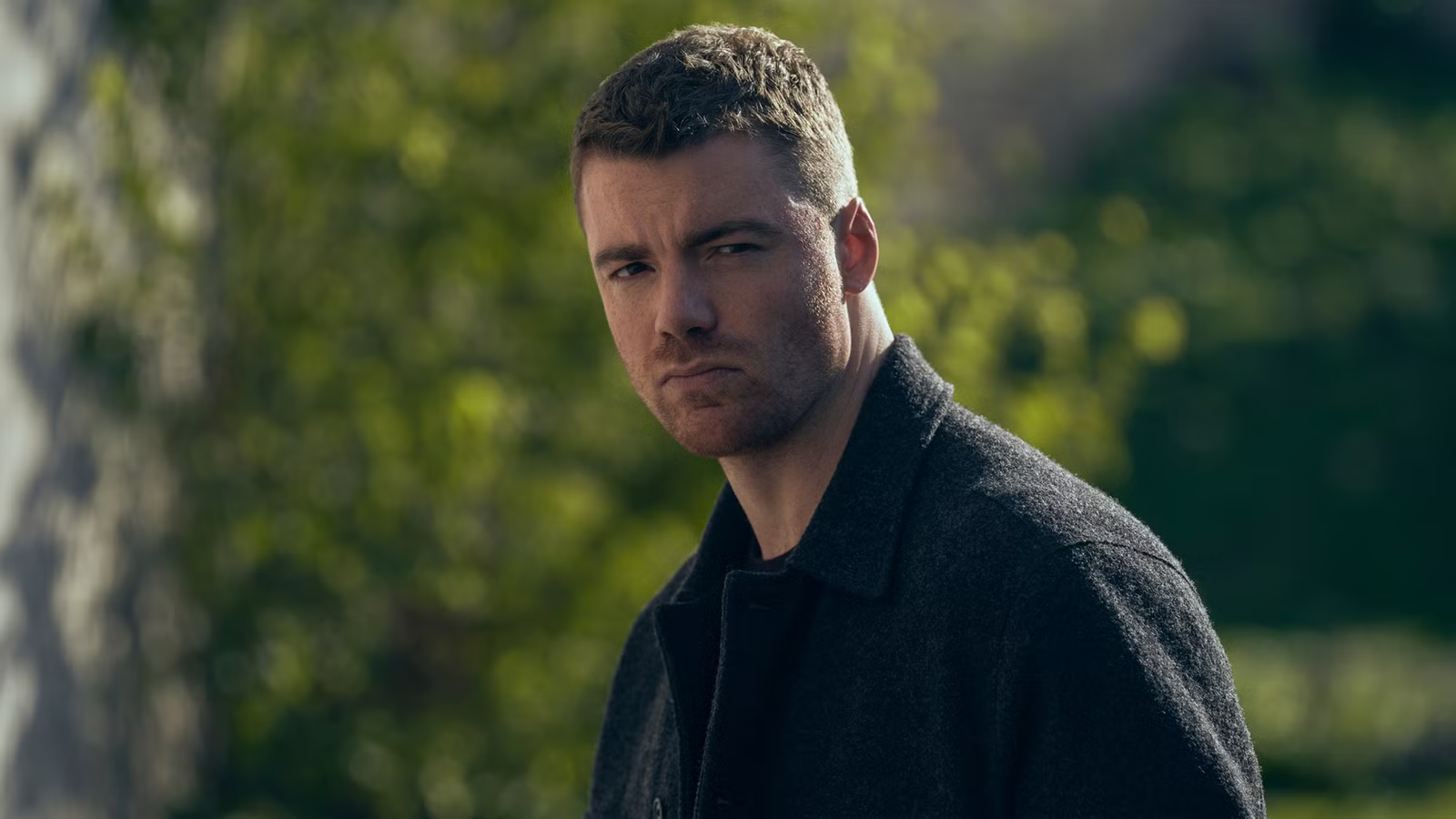
That pause matters, because most of the season runs on breathless momentum. Peter Sutherland, played with a tight-jawed sincerity by Gabriel Basso, has traveled a long way from answering phones in a White House basement. By now he’s in open conflict with the President of the United States, Richard Hagan, whose folksy menace Ward Horton plays not as cartoon villainy but as something more unsettling: a man who genuinely believes history will forgive him if he survives long enough. His partner in crime, the First Lady Jenny Hagan, gets a sharper edge from Jennifer Morrison, who understands that smiling while lying is still a form of violence.
The conspiracy itself money laundering routed through a nonprofit and a shadowy capital firm hardly feels new. What keeps it watchable is how personally it lands. Peter isn’t chasing justice in the abstract. He’s trying to outrun betrayal, particularly from Adam, his partner and old friend, embodied by David Lyons with the weary conviction of a man who keeps telling himself this is for the greater good. When Adam takes Chelsea Arrington out for a drive, and she realizes halfway through that she’s not coming back, the show stages it with unnerving patience. Fola Evans-Akingbola plays Chelsea as someone doing mental math at gunpoint, measuring every laugh, every breath, trying to stay alive without tipping her hand. The car crash that follows feels less like an action beat than a moral collision finally made physical.
If the season has a secret weapon, it’s Isabel De Leon. Genesis Rodriguez gives the journalist a sharpness that cuts through the usual procedural chatter. Isabel believes in the story the way some people believe in religion, and when her editors hesitate lawyers hovering, timelines stretching her frustration feels earned. There’s a terrific scene where she realizes the truth will die quietly unless she’s willing to gamble everything on one more source. Not a chase. Not a gunfight. Just a decision.
Highly Recommended: Dark Winds Season 4 Parents Guide
That decision leads her to Freya Myers, played by Michaela Watkins with a brittle confidence that slowly fractures. Freya believes power protects its own until the moment she understands she’s expendable. Watching her flee through Grand Central Station, heels clicking, face drained of certainty, the show briefly becomes something else entirely: a portrait of a woman realizing the rules she trusted were never real.
Then there’s The Father. Stephen Moyer gives him a tired soulfulness that suggests a man who has memorized too many exits. His decision to walk away from violence, to choose his son over his profession, lands quietly. Later, when he considers revenge and ultimately doesn’t take it, the show resists the cheap thrill. He leaves the bar. Life continues. It’s one of the season’s better instincts.
Not everything works. The pacing occasionally trips over its own urgency, and the final political fallout arrives wrapped in an almost comically clean bow. The idea that a president can pardon himself, stroll off into the sunset, and still feel like a “happy ending” leaves a sour taste the show doesn’t fully interrogate. Maybe that’s honesty. Maybe it’s convenience. I’m still deciding.
By the time Peter walks through Central Park with his boss, bruised and exhausted, talking about taking a real vacation, I felt something rare for a thriller in its third season: relief. Not because the danger is gone, but because the show allows its hero to rest. New partner. New president. New mess waiting somewhere offscreen.
Season 3 doesn’t reinvent the series. It doesn’t have to. What it does instead is slow down just enough to remind us that the most dangerous lies aren’t the conspiracies whispered in back rooms, but the ones people tell themselves about why they’re doing all this in the first place. And sometimes, stepping aside is the bravest act left.
The Night Agent Parents Guide
The Night Agent carries a TV-MA rating, and it doesn’t feel inflated or performative. The show isn’t trying to shock its way into adulthood. It earns the label by treating danger, power, and consequence as things that bruise people instead of bouncing off them.
Violence and intensity dominate the experience. Guns aren’t decorative; they’re tools, and when they come out, the show means it. Characters are followed, cornered, tricked by people they once trusted. There are car crashes that feel ugly rather than exciting, fights that end with bodies slumped instead of standing tall, and killings staged to disappear into bureaucracy. What lingers isn’t the blood it’s the waiting. The long pauses before something goes wrong. The sense that no room is ever truly safe.
The language sounds like what you’d expect from exhausted adults under pressure. People swear because they’re angry, afraid, or out of patience not because the script wants to prove how tough it is. Profanity shows up often and casually, woven into arguments and threats the way it is in real life when tempers fray. There aren’t extended slur-filled monologues, but the tone stays sharp and confrontational. Conversations cut. Words land hard. Nobody stops to apologize for how they speak.
Sexual content barely registers. There are relationships, glances that suggest history, moments of intimacy that remind you these people have lives outside the crisis but the camera never lingers. No nudity. No explicit sex. The show has other appetites.
Alcohol appears frequently, mostly as atmosphere. Characters drink in bars, offices, and quiet corners when the day finally lets go of them. It’s coping, not celebration. Drugs remain peripheral, tied loosely to criminal networks rather than personal use. Smoking barely makes a dent.
Age-wise, this is firmly adult television. Not just because of the violence or the language, but because of the emotional terrain. The show assumes viewers can sit with moral compromise, institutional rot, and the idea that doing the right thing doesn’t always fix anything. Younger teens might follow the plot, but the weight of it the betrayals, the exhaustion, the hollow victories lands best with grown viewers who know how complicated survival can be.
Highly Recommended: The Last Thing He Told Me Season 2 Parents Guide
