Last Updated on February 18, 2026 by Monica Castillo
The Mortuary Assistant is not rated by the Motion Picture Association (MPA). As with many indie and genre-driven horror releases, parents should rely more on content awareness than on an official label.
In the midst of the current video-game-to-film gold rush where studios keep circling the safest, biggest brands it’s been quietly interesting to watch some filmmakers drift toward stranger, more internet-fueled successes instead.
Blumhouse’s take on Five Nights at Freddy’s transformed Scott Cawthon’s once-niche nightmare into multiplex fodder, while Markiplier surprised almost everyone by independently shepherding Iron Lung into a genuine box-office curiosity even as it had the misfortune of sharing cultural oxygen with Sam Raimi’s gleeful return to horror, Send Help. You can feel an appetite forming: not just for adaptations, but for the kind that arrive with cult devotion already baked in.
Now Dread steps into that arena with The Mortuary Assistant, and what’s frustrating is how close it comes to something genuinely special before slipping on its own ambition. The film is deeply loyal to the game’s narrative spine and iconography, and there are moments when its imagery chills you in exactly the right way. But it also buckles under the weight of its own mythology, and for a horror story born of dread and tension, it rarely finds a way to truly scare.
Adapted from The Mortuary Assistant by Darkstone, the film follows Rebecca Owens, a young woman finishing her mortuary science training at River Fields Mortuary under the watchful, unsettling eye of Raymond Delver. Rebecca wants this job badly you sense it in her posture, in the way she moves through the space but Raymond keeps erecting quiet barriers, forbidding night shifts and steering her away from certain locked rooms. It’s the kind of behavior that feels wrong before it feels threatening.
Things escalate quickly when Raymond summons Rebecca in the dead of night to handle a sudden wave of bodies. When she arrives, he locks her inside and calls her with an impossible warning: she’s already possessed. If she wants to survive, she’ll have to identify the demon attached to her and perform her own exorcism before time runs out. It’s a cruel directive, delivered with chilling calm, and you can almost hear the game’s branching choices echoing in the background.
Left with only fragments of instruction from the evasive Raymond, Rebecca’s night becomes a collision of the supernatural and the deeply personal. Hallucinations blur into memories—her battles with addiction, the deaths of her parents, conversations that feel too intimate to be entirely imagined. Demonic figures intrude with grotesque familiarity. As Rebecca uncovers pieces of Raymond’s own disturbing history, the film asks her and us to sift truth from manipulation, survival instinct from self-destruction.
Like The Last of Us and Five Nights at Freddy’s before it, The Mortuary Assistant benefits from having its original architect involved. Brian Clarke returns to his story alongside Tracee Beebe, and that continuity shows.
The heart of Clarke’s narrative remains largely intact, and there are even a few thoughtful expansions that suggest a genuine desire to adapt rather than merely replicate.
To their credit, Clarke and Beebe clearly understand that not everyone walking into the theater has spent hours embalming digital corpses. The film devotes real attention to Rebecca’s history her recovery, her grief, the fragile adjustments of someone trying to build a stable life after addiction. These elements grant her a sense of agency the game achieves through player control, and they deepen the film’s central ambiguity. When Rebecca speaks with people from her past, those scenes cut sharply; you can feel old wounds reopening, shaping her evolution in ways that feel painfully human.
Recommended: Lead Children (2026) Parents Guide
Where the adaptation begins to wobble is in its struggle to decide what to preserve and what to let go. One notable omission is Rebecca’s mother, whose death from an overdose in the game becomes a haunting mirror for Rebecca’s own addiction. It may sound like a small change, but its absence dulls the story’s sense of tragic symmetry. Without it, Rebecca’s arc never quite closes the emotional loop that once made it so devastating.
Similarly, the film glosses over the fact that Raymond was once Rebecca’s teacher in mortuary science. By skipping this shared history, the story undermines its own tension. You start wondering why Rebecca trusts him so readily, why she doesn’t challenge his increasingly bizarre demands. Later revelations about Raymond’s past land with less force, because they feel like discoveries about a stranger rather than a fallen mentor she might once have admired.
Clarke and Beebe are understandably eager to explain their rules of demonic possession, but with a tight 91-minute runtime, the film often feels buried beneath exposition. Information arrives in fits and starts, sometimes withheld for artificial mystery, other times dumped wholesale. Raymond insists Rebecca must figure everything out herself until he suddenly explains everything anyway. It’s hard not to notice how much oxygen this consumes, leaving less room for atmosphere to breathe.
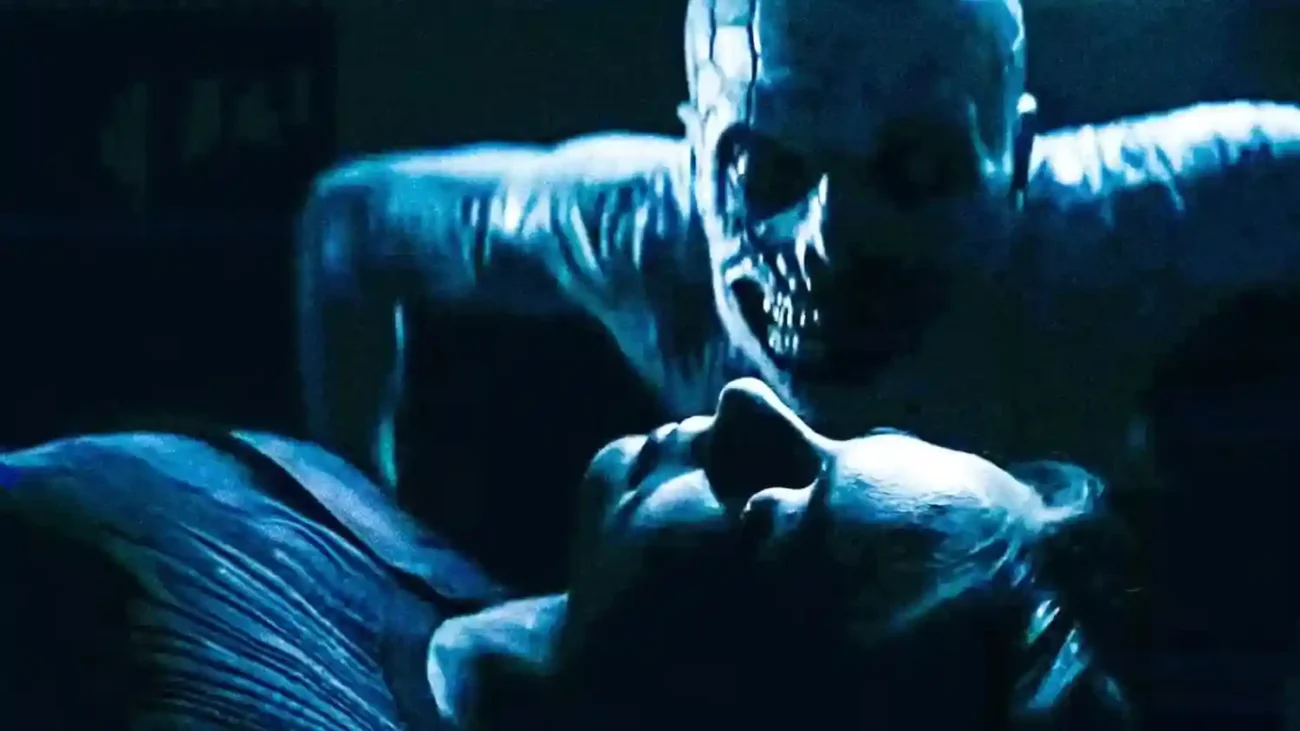
That focus on lore also drains the film’s capacity to frighten. Director Kipp brings a striking visual confidence, working with cinematographer Kevin Duggin (The Jester 2) to keep the frame alive with negative space. You find yourself scanning corners, doorways, reflections. The commitment to practical effects is especially effective during the embalming sequences, which carry a tactile unease, and seeing The Mimic rendered in live action is genuinely unsettling at least at first, before the camera lingers just long enough to soften its impact.
But when the film reaches for overt scares jump moments, possessed loved ones lunging into frame it falters. Without the interactive tricks of the game, these scenes feel oddly flat. Some possession sequences tip into melodrama, with exaggerated growls and contorted performances that threaten to break tension instead of tightening it. A few moments even flirt with unintended humor, the kind that pulls you out rather than pulling you under.
What steadies the film are its leads. Rebecca is anchored by a quietly compelling performance from Holland, whose restraint allows small gestures a pause, a glance, a tremor to carry enormous weight. She captures the ache of someone marking an addiction-recovery milestone while everything else collapses around her. Opposite her, Paul Sparks infuses Raymond with just enough ambiguity to keep you guessing. His shiftiness feels intentional, withholding, and it sustains the film’s mystery even when the script overexplains.
And yet, for all its individual strengths, The Mortuary Assistant never quite locks into place. It has atmosphere to spare, flashes of disturbing beauty, and a strong central performance. What it lacks is rhythm and, crucially, fear. By cramming its brief runtime with mythology and rules, it sacrifices the slow-burn terror that made the game linger in players’ minds. The result feels like a relic of an earlier era of game adaptations: ambitious, respectful, intermittently compelling, but ultimately content to hover in the shadow of what it might have been.
The Mortuary Assistant (2026) Parents Guide
Violence & Intensity: The film leans heavily into dread: disturbing imagery involving corpses, embalming procedures shown in close, tactile detail, and sudden supernatural intrusions that are meant to unsettle rather than shock. Demonic possession sequences include contorted bodies, aggressive behavior, and threatening vocalizations, though the violence is rarely explicit. The cumulative effect can be intense, especially for viewers sensitive to claustrophobic or oppressive horror. You can feel the movie pressing in on its characters and the audience without always offering relief.
Language: The language is moderate and rooted in emotional realism rather than shock value. Characters use occasional profanity during moments of stress, fear, or confrontation, but there are no slurs or sexually explicit insults. The tone of the dialogue is heavy and somber, reflecting grief, addiction recovery, and psychological unraveling more than casual or comedic speech.
Sexual Content / Nudity: There is no sexual content in the traditional sense. No sexual activity, erotic imagery, or nudity is presented for titillation. Any exposure to bodies occurs strictly within the professional context of mortuary work and embalming, portrayed clinically and grimly rather than voyeuristically.
Drugs, Alcohol & Smoking: The protagonist’s past struggles with addiction are discussed openly and depicted through dialogue, flashbacks, and emotional confrontations. While drug use is not glamorized, references to substance abuse, relapse fears, and recovery milestones are central to the story’s emotional core.
Age Recommendations: Given its bleak tone, disturbing imagery, and mature psychological themes, The Mortuary Assistant is not recommended for children or younger teens. parental discretion is strongly advised. For most families, this is best suited to adults, particularly those comfortable with slow-burn horror, grief-centered storytelling, and unsettling supernatural video games.
The Mortuary Assistant opens in theaters this Friday before arriving on Shudder on March 27.
