Last Updated on February 20, 2026 by Monica Castillo
There’s a peculiar corner of the Apple TV+ ecosystem occupied by shows that are competently made, impressively cast, and oddly elusive series whose titles slip out of your mind even as you’re watching them. You might confidently recommend Ted Lasso, but then hesitate when trying to recall the name of that Owen Wilson golf comedy yes, Stick is real. You’ll evangelize Severance, but draw a blank on the Gugu Mbatha-Raw thriller Surface. And it still surprises people to learn that Uma Thurman once headlined an international espionage drama called Suspicion, or that the Godzilla/King Kong spinoff Monarch: Legacy of Monsters hinges on the clever casting of Kurt and Wyatt Russell playing the same man across generations.
This isn’t really a knock on Apple’s promotional muscle if anything, the company is famously patient, willing to keep feeding shows that don’t immediately set the world on fire rather than guillotining them after a single season the way other streamers have. No, the issue feels more existential. We’re living in an era of television excess, a time when the sheer volume of content ensures that entire wings of a streaming platform can quietly vanish into the noise, even when recognizable stars are doing earnest, sometimes very good work.
That’s the strange, half-hidden neighborhood where The Last Thing He Told Me has resided until now. And with its second season, it finally feels like the series has figured out how to breathe, and more importantly, how to move.
Highly Recommended: Black Doves 2024 Parents Guide
When the show debuted in 2023, adapted by Josh Singer and novelist Laura Dave from Dave’s own book, it unfolded like a careful walk through the soft lies people tell to preserve intimacy. Jennifer Garner played Hannah Hall, a Sausalito art dealer living on a dreamy houseboat, whose life with her tech-savvy husband Owen (Nikolaj Coster-Waldau) appears settled, even idyllic, until he vanishes without warning. Left behind are Hannah and Owen’s teenage daughter Bailey (Angourie Rice), two people bound more by circumstance than affection, forced to sift through the wreckage of a man they never fully knew.
The truth, revealed with only modest coyness, is grim but serviceable: Owen has been running from his former father-in-law Nicholas (David Morse), a man who swore vengeance after Owen turned state’s evidence against the Campano crime family. That cooperation indirectly led to the death of Nicholas’ daughter Katherine Owen’s wife, Bailey’s mother and the emotional aftershocks ripple outward. The first season worked well enough as a domestic thriller about collateral damage, about how secrets poison everyone nearby. It was pleasant, low-pressure viewing, the kind of story you might enjoy on a plane and then promptly forget once the wheels hit the ground.
Highly Recommended: Lead Children (2026) Parents Guide
Which is why the announcement of a second season felt, at first, unnecessary. Season 1 closed on a note of uneasy calm: Hannah and Bailey accept Nicholas’ protection once it becomes clear the Campanos are still circling, and they settle into a life defined by vigilance and restraint. The tension seemed spent, the emotional accounts balanced. You could be forgiven for thinking the story had said everything it needed to say.
And yet, Season 2 suggests that Singer, Dave, and Garner who also serves as executive producer alongside Reese Witherspoon understood something vital: if viewers were going to return at all, the show couldn’t afford to whisper anymore. It needed to lunge.
From its opening stretch, the second season feels sharper, more restless. Five years of uneasy peace end abruptly when a death in the Campano family gives the mob permission to tear up old truces. Hannah learns this the hard way, when an assassin shows up at her door in a sequence that finally lets Garner tap into the physical authority she’s carried ever since Alias. You can feel the show exhale in that moment, relieved to stop pretending it isn’t built around an action star.
What follows is a decisive tonal shift. The series sheds its earlier fixation on quiet deduction—no more languid scenes of Hannah brooding on her postcard-perfect houseboat, no more academic scavenger hunts through libraries and retired professors. Season 2 understands the danger in front of it and barrels toward it. It reopens Hannah’s unresolved wounds with her estranged mother (a warmly complicated Rita Wilson), escalates the stakes it once only hinted at, and eventually propels Hannah, Bailey, and Owen into an international scramble for survival that insists sometimes brutally that time doesn’t actually heal much of anything.
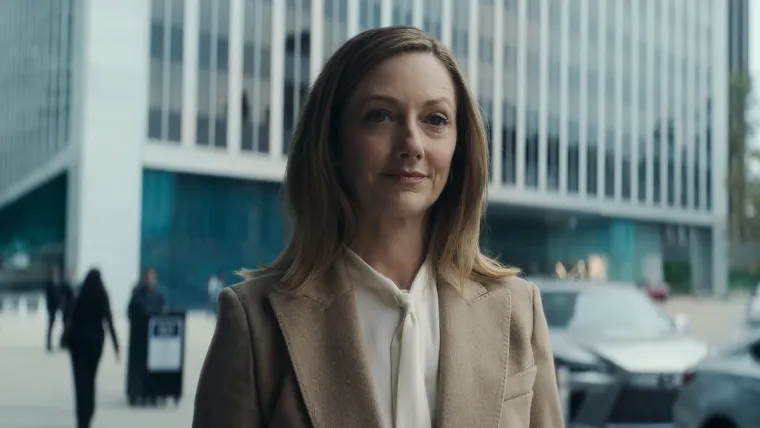
Arrayed against them is a newly fleshed-out Campano family: John Noble’s iron-spined patriarch, Luke Kirby’s impulsive and dangerous heir, and Judy Greer’s enigmatic daughter, a figure kept deliberately at arm’s length. Greer’s casting will inevitably draw attention because of her shared rom-com history with Garner in 13 Going on 30, but the show is savvy about that baggage. Singer and Dave resist the urge to cash in immediately, doling Greer out in careful doses and letting the tension of that reunion simmer rather than spike. If nostalgia is what brings you back, the series makes you earn it.
That demand for patience extends to the season as a whole. In widening its scope, the show also stretches itself thin at times. There’s a growing roster of threats and allies new antagonists, returning figures like the increasingly volatile U.S. Marshal Grady Bradford (Augusto Aguilera) and not all of them are given equal dramatic weight. Some threads feel richer than others. Still, there’s a palpable sense of momentum. Where Season 1’s high point was a quietly tense conversation at Nicholas’ bar in Austin, Season 2 eventually finds its characters exchanging threats along the Seine in Paris. It’s hard not to smile at the escalation. Look how far this modest little show has traveled.
The five-year time jump also does wonders for Bailey. Now a college student discovering her voice as a playwright, she’s no longer just reacting to the adults around her. Rice plays her as someone suspended between grief and resolve, a young woman finally ready to confront the legacy she’s inherited rather than merely endure it. She’s not alone in refusing to be drowned out.
Garner, though, remains the gravitational center. The series finally understands that she’s at her best when the story doesn’t give her space to rest. She commands this season with a sense of release, leading a messy, high-stakes mission that’s less about deciphering a man’s past and more about reclaiming agency over her own future. The title itself subtly inverts: what Owen once told Hannah no longer defines her. She’s the one speaking now, and Garner seems to relish every moment of being impossible to ignore.
The Last Thing He Told Me Parents Guide
Rating: TV-MA (Mature Audiences)
Platform: Apple TV+
This series earns its TV-MA rating less through shock than through sustained tension and adult thematic weight. It’s not gratuitous, but it is emotionally and narratively heavy in ways that skew decisively toward older viewers.
Violence & Intensity: Characters are stalked, threatened, and attacked, with assassins, mob figures, and law enforcement pressure driving much of the tension. There are shootings, attempted killings, and scenes built around imminent danger that may feel intense even when bloodshed is limited. The suspense often comes from the anticipation of violence rather than its depiction, which can be just as unsettling. Younger viewers may find the constant sense of threat emotionally overwhelming.
Language: There are no frequent slurs, but the tone can be sharp, hostile, and adult, especially during confrontations involving criminals or high-stakes negotiations. Language is not excessive, but it’s clearly not curated for younger audiences.
Sexual Content / Nudity: There is no explicit sexual activity or nudity. References to romantic relationships, marriage, infidelity, and past intimacy are discussed in an adult but restrained manner. Emotional intimacy and relationship fallout are far more central than physical sexuality, making this one of the milder categories content-wise.
Drugs, Alcohol & Smoking: There is no notable drug use, and smoking is either rare or background texture rather than a focal behavior. Substance use exists in a realistic, adult context without encouragement or emphasis.
Age Recommendations: Recommended for ages 16–17 and up, depending on maturity. While there’s little explicit content, the show’s themes organized crime, betrayal, death, moral compromise, and sustained psychological stress are complex and adult.
Season 2 of The Last Thing He Told Me arrives on Apple TV+ with new episodes releasing Fridays and for the first time, it feels like a show that knows exactly why it’s here.
