Last Updated on February 19, 2026 by Monica Castillo
The Dreadful is Rated R by the Motion Picture Association for violence and bloody images, as well as a sexual reference. This is a sober, somber R-rating less about excess and more about emotional and moral severity.
Natasha Kermani has shown before that she’s drawn to horror that unfolds patiently, even stubbornly, trusting mood over momentum. Last year’s Abraham’s Boys, her restrained take on Dracula lore, asked viewers to sit with silence and implication longer than many were comfortable with. The Dreadful follows that same instinct. It moves deliberately, sometimes frustratingly so, but when it chooses to strike, it does so with sudden, unsettling force. Drawing inspiration from an ancient Shin Buddhist parable the same source that fueled Kaneto Shindō’s Onibaba Kermani transplants its bones into 15th-century England, crafting a tale steeped in envy, grief, and creeping distrust. This is a film that refuses haste. It wants you to linger inside its fog, to feel how suspicion seeps into daily life when isolation and fear become constant companions.
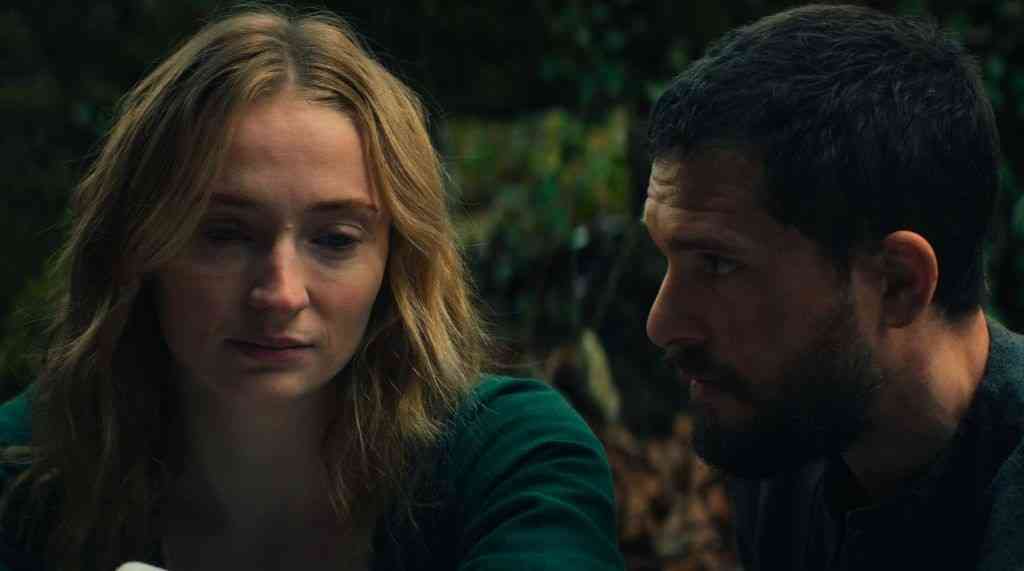
Set during the Wars of the Roses, the story centers on Anne (Sophie Turner, quietly compelling) and her formidable mother-in-law Morwen (Marcia Gay Harden), living together on a remote patch of land while the men are away at war. Seamus, Anne’s husband and Morwen’s son, left to fight long ago and has not been heard from since. Anne exists in a kind of suspended loneliness, surrounded mostly by women, clinging fiercely to her faith as if prayer alone might summon good news across battlefields and time. Morwen, by contrast, has little patience for divine intervention. She keeps the household afloat through far harsher means, willing to lie, steal, even kill if it means survival. When Jago (Kit Harington) washes ashore one day—having abandoned the war and barely escaped with his life he brings devastating confirmation: Seamus was murdered by bandits. Jago lived. Seamus did not. You can feel the air change in that moment, the way certainty, however painful, can be more destabilizing than hope.
Jago’s return also reopens old wounds and old desires. He and Anne share a childhood bond that never fully faded, and grief has a way of eroding moral defenses. Anne, struggling to contain her emotions, eventually agrees to an affair with him, even as her nights fill with disturbing dreams and waking visions. Chief among them is a spectral figure: a man encased in armor, roaming the countryside on horseback, a reminder of war that refuses to stay distant or abstract. It’s hard not to read these images as the mind’s attempt to give shape to trauma, guilt, and longing all colliding at once.
Highly Recommended: The Mortuary Assistant (2026) Parents Guide
The world of The Dreadful is conspicuously emptied of men. With most gone to fight, Anne and Morwen are left to tend the land themselves, and the land gives little back. Food is scarce, the environment punishing. Even a raw onion an almost absurdly humble comfort—turns out to be rotten, a small but devastating insult from an already cruel world. Kermani is attentive to these details, letting deprivation speak for itself. Anne’s devotion to God is constant; she never misses church, continually offering her soul to a silence that answers nothing. There’s an ache beneath this devotion, heightened by the presence of children around her. Anne cannot conceive without her absent husband, and the script subtly suggests how that stolen possibility gnaws at her identity.
Morwen’s faith, such as it is, resides in cold steel. She meets desperation with violence, ambushing travelers and outsiders, stealing their money and supplies under cover of isolation. The killings arrive sporadically, but each one deepens the film’s moral chill. Harden leans into Morwen’s brutality without softening it, creating a character both repellent and grimly pragmatic. Her actions form the film’s most overt expressions of horror, grounding the story even as other elements drift toward the psychological and the uncanny.
Jago’s presence complicates everything. As the sole man to return, he carries both news of death and the promise of companionship. He is attentive to Anne, eager to console her, quick to help her imagine a life beyond mourning. Yet Kermani wisely keeps his motivations opaque. Harington plays him as someone visibly shaped by violence, a survivor who may also be an opportunist. The film invites suspicion and lets it simmer, layering emotional uncertainty atop the already fragile domestic dynamic. Anne’s nightmares intensify. The armored figure lingers. Reality itself begins to feel unstable.
Kermani is less interested in propulsion than in accumulation. She prioritizes atmosphere, letting dread build slowly through repetition, silence, and implication. As folk horror, The Dreadful can feel almost too restrained; it rarely pushes its ideas to grotesque or shocking extremes. When it does turn vicious, the moments land sharply, if briefly. The final act reaches toward something more enigmatic, leaning harder into mystery and abstraction, but it doesn’t fully coalesce. You sense that the film needs more time more space to let its final ideas properly ferment.
Highly Recommended: How to Make a Killing (2026) Parents Guide
Still, what remains is a work rich in mood and moral discomfort. The Dreadful may not overwhelm, but it unsettles in quieter ways, offering images of danger, faith, manipulation, and grief that linger after the screen goes dark. For viewers willing to meet it on its own terms, there’s a cold, persistent unease here that feels earned, even when the answers remain just out of reach.
The Dreadful (2026) Parents Guide
Violence & Intensity: Several characters are killed at close range, usually with bladed weapons, and while the film does not linger indulgently on gore, blood is visible. These acts arrive suddenly, often in quiet moments, which makes them more jarring. There’s also a persistent atmosphere of dread: visions of a spectral armored figure, nightmares, and psychological torment that may trouble sensitive viewers.
Language: There are no modern slurs, but the tone throughout is bleak, emotionally heavy, and occasionally cruel in its implications. The distress comes more from what’s implied than what’s said aloud.
Sexual Content / Nudity: There is a sexual relationship between two adult characters following shared grief. Sexual activity is implied rather than explicit, with no graphic nudity. The emotional weight of the encounter rooted in loss, longing, and moral conflict is more prominent than physical detail.
Drugs, Alcohol & Smoking: Alcohol appears occasionally, consistent with the period setting, but there is no depiction of substance abuse. No drug use is shown. Smoking is not emphasized.
Age Recommendations: The Dreadful is best suited for ages 17 and up. While it lacks the relentless brutality of more extreme horror films, its themes murder as survival, spiritual despair, manipulation, and psychological unraveling require emotional maturity. Younger teens may struggle less with what they see than with what the film asks them to sit with.
