Last Updated on March 14, 2026 by Monica Castillo
Preschool is Rated PG-13 by Motion Picture Rating (MPA) for some language, suggestive material and violence.
A newborn stares at the ceiling lights. His father stares back like a man who’s just realized the universe handed him a very complicated assignment.
That’s how “Preschool” begins. Not with a joke, not with a pratfall but with a slightly unnerving moment of paternal honesty. The dad, Brian, practically warns the kid about the long, unforgiving road ahead. For a brief minute I thought the movie might be building toward something sharp about modern parenting the strange panic that settles into people the moment a child arrives, the sense that every choice from that day forward might shape an entire life.
Then somebody slips on a banana peel. Figuratively. Sometimes literally.
Josh Duhamel directs and stars here, and if you’ve watched his acting career, you might notice a pattern. He often gravitates toward serious material men facing crises, men with a certain heaviness behind the eyes. When he directs, though, he seems to want the opposite. His previous films, the two entries in the Buddy Games series, leaned hard into rowdy humiliation comedy. “Preschool” isn’t quite as wild, but the instinct is the same: grown adults behaving badly while the camera patiently records the damage.
The premise could’ve supported something sly. Brian (Michael Socha) runs a construction business and prides himself on working his way up the ladder. His wife Sarah (Antonia Thomas) shares his ambition for their son Dylan, and that ambition now points squarely at Puggsley’s Academy of Excellence a school so exclusive it sounds like it should come with its own crest and secret handshake.
Unfortunately, there’s only one open seat.
Standing in Brian’s way is Alan, played by Duhamel, a wealthy restaurateur who approaches fatherhood like a long-term investment portfolio. His daughter Grace will have every advantage. His wife Lauren (Charity Wakefield) supports the mission with quiet determination. When the headmistress, played with brisk composure by Fenella Woolgar, announces that both families must submit an essay arguing why their child deserves the spot, the competition begins.
You can imagine a clever film growing out of this setup. Subtle sabotage. Smiling parents quietly undercutting each other over dinner. Class anxiety simmering beneath polite conversation.
“Preschool” has other ideas.
Very early on, Brian sneaks into the school to take a look around and promptly destroys a classroom full of science projects in one long stretch of clumsy chaos. Beakers shatter. Foam spills everywhere. Brian flails like a man who wandered onto the wrong stage during a live sitcom taping. The sequence keeps going long after the joke has revealed itself.
That scene tells you exactly what kind of movie you’re watching.
From there the rivalry spreads across a series of competitive rituals: a dinner party where Brian wanders Alan’s expensive home with thinly disguised disbelief, pausing in the yard to study a hulking Michelangelo-style statue like it might start talking. A padel match were polite sportsmanship dissolves into pure ego. Brian even hires a booming movie-trailer narrator to deliver his admissions essay as though the fate of civilization depends on it.
Sometimes the movie feels like it’s stacking dares instead of telling a story. What’s the next awkward disaster we can throw these people into?
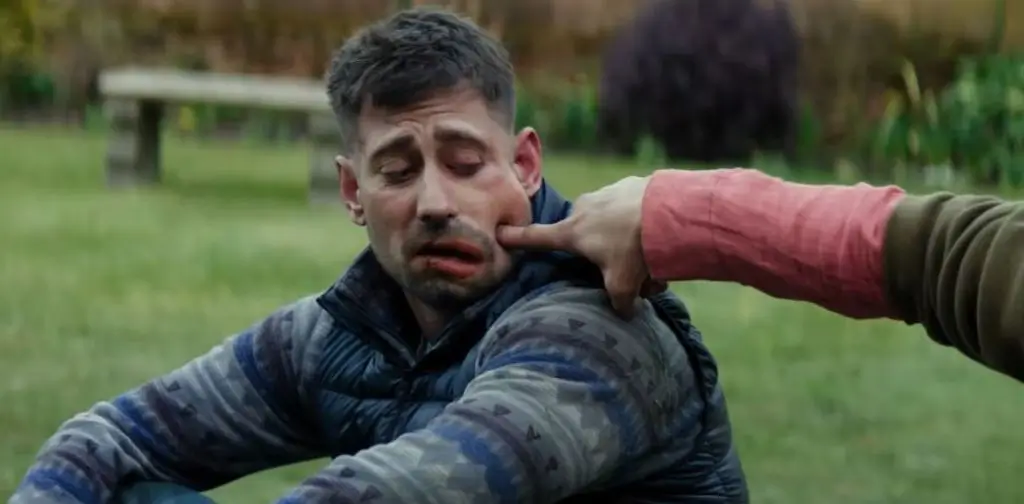
Things grow stranger as Brian attempts to ingratiate himself with the performers on a local children’s television program and instead wrecks the production in spectacular fashion. Later he drags residents from a senior care home into an ill-conceived revenge plan aimed at sabotaging Alan’s restaurant launch. By the time spider bites and fistfights enter the picture, the whole preschool rivalry has become an excuse for increasingly elaborate humiliation.
What’s missing is rhythm.
Duhamel the director never quite finds the comic tempo that material like these needs. The gags arrive, linger awkwardly, and wander off. Socha gives Brian an appealing working-class frustration a man who knows he’s up against someone richer, smoother, better connected — but the script never sharpens that tension into anything memorable. Duhamel plays Alan as the polished adversary, though the performance stays oddly restrained for someone supposedly locked in a battle over his child’s future.
The screenplay from Richard D’Ovidio, whose earlier credits include Thirteen Ghosts and The Call, eventually steers the story toward a gentler place. Hurt feelings surface. Pride softens. Characters realize that maybe they’ve lost sight of what actually matters.
The shift arrives so suddenly it feels less like growth and more like the movie glancing at the clock.
Still, I kept thinking about the idea buried underneath all the chaos. Parenting today often resembles an arms race the right school, the right programs, the right early advantages. Adults convince themselves that the path to a child’s happiness begins with winning some arbitrary contest when the kid is four years old.
“Preschool” circles that anxiety without quite knowing what to do with it.
And I kept returning to that first scene the father looking down at his newborn, already worried about the road ahead. That moment has a flicker of truth in it. A little fear. A little love.
The rest of the film keeps slipping on the banana peel. But that image stays put.
Preschool (2026) Parents Guide
The strange thing about “Preschool” is that it’s technically about four-year-olds… yet almost everything chaotic in the movie comes from the adults losing their composure. The children mostly hover at the edges while their parents behave like overgrown kids fighting over a toy. That makes the film easier to navigate for families than the PG-13 label might suggest but there are still a few things parents may want to know before hitting play.
Violence & Intensity: Adults shove each other, trade punches, and stumble through physical scuffles that look painful but play for laughs. One sequence involves a classroom full of science projects getting wrecked in a clumsy chain reaction glass break, foam sprays everywhere, and the mess keeps escalating. Later scenes add a fistfight between the rival fathers and a spider bite that causes a panicked overreaction. The tone never shifts into genuine menace. Think chaotic sitcom energy rather than anything frightening.
Language: The dialogue includes a handful of mild profanities and frustrated outbursts — the kind of language adults use when they’re losing an argument or embarrassing themselves in public. Nothing especially harsh or hateful shows up, and there are no slurs. Most of the verbal humor comes from sarcastic jabs between the competing dads rather than explicit swearing.
Sexual Content / Nudity: There’s no nudity in the film. A few moments drift into mild suggestive humor, mostly in the form of awkward adult comments or visual jokes that younger viewers probably won’t notice. One gag involves an imposing classical-style statue in a wealthy family’s yard that makes another character visibly uncomfortable. It’s played as an odd sight gag more than anything risqué.
Drugs, Alcohol & Smoking: There’s no drug use and no smoking presented as part of the story.
Age Recommendations: Most children under 10 will probably miss the jokes entirely. For families with preteens and teenagers roughly 12 and up the film should land as a harmless, occasionally chaotic comedy about competitive parents who forget to act like adults. Younger viewers, meanwhile, might just wonder why all the grown-ups keep breaking things.
