Last Updated on March 8, 2026 by Monica Castillo
Peaky Blinders: The Immortal Man is rated R by the Motion Picture Association for violence, bloody images, strong language, some drug use, and nudity.
I keep returning to the image of Tommy Shelby walking alone toward the camera in Peaky Blinders: The Immortal Man. Not striding with the swagger of a kingpin, not scheming with the cold calculation of a politician, but walking. Just walking. The world behind him is quiet, yet you feel its weight pressing in, as if history itself leans on his shoulders. It’s an odd moment to open on, but fitting. Tommy has always been a man shadowed by his own choices, haunted by the people he’s loved and lost and now, in this Netflix continuation of the BBC series, the ghosts have multiplied.
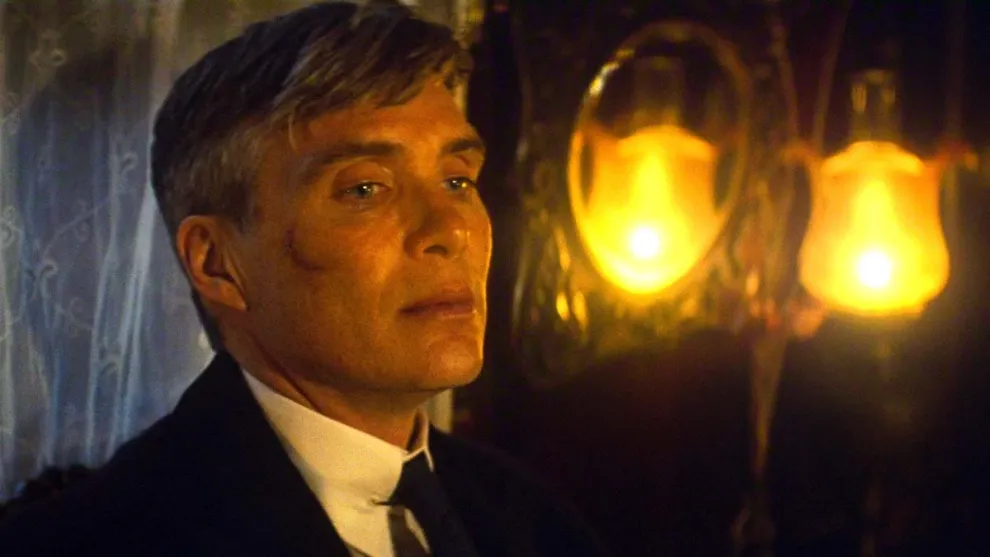
Cillian Murphy carries it all. You watch him and understand, immediately, the quiet gravity of a man who has survived war, ambition, and betrayal, only to find there are still things he cannot outrun. Murphy doesn’t just slip back into Tommy’s tailored suits and razor-edged cap; he bends the character into something heavier, more fragile. This is the same ruthless criminal, yes, but also a man whose hands tremble at the memory of what he’s done, and what he still might do. Every loss lands harder because Murphy makes it feel earned. Even the ones that seem written in haste characters erased or sidelined without fanfare still manage to pierce you because he carries them with him. There’s a moment early on, shocking in its quiet, where Tommy is responsible for someone’s death, and Murphy’s eyes always a little too knowing, a little too dark let you feel the gravity before a word is spoken.
Recommended:Young Sherlock (2026) Parents Guide
The film isn’t perfect. It stumbles under clunky exposition and occasionally lurches into fan service, particularly in scenes that remind you this is, at heart, an epilogue. Yet even when the story feels stiff, Murphy animates it. A long tracking shot of him moving through the rubble of a world still reeling from World War II isn’t just a set piece it’s a portrait of grief and endurance. You sense the landscape outside him collapsing even as the man inside fights to keep a hold on what little remains of decency.
History seeps in, as it always has in Peaky Blinders, though with higher stakes this time. Operation Bernhard a Nazi plot to destabilize the British economy with counterfeit currency drags Tommy back from hiding. His son, Duke, played with startling subtlety by Barry Keoghan, teeters on the edge of repeating his father’s sins. Keoghan gives Duke the fragile edge of a boy forced into a man’s war, balancing terror and vulnerability in ways that make their shared scenes feel unbearably tense. In one sequence, set to the haunting strains of Grian Chatten’s “Puppet,” father and son confront each other in a way that’s equal parts dark comedy and tragedy: wrestling in mud, eyes locked, neither able to escape the gravity of their choices. It’s ridiculous and devastating in the same breath.
The film leans into spectacle at times. Tommy riding back into Birmingham on horseback, once forgotten by some, mythologized by others, teeters on fan service. But it also asks questions about legacy, memory, and the cost of a life built on both brilliance and cruelty. Murphy allows these questions to land. You can see him measuring the weight of every misdeed, every small kindness squandered or ignored. Even in sequences that feel like they’re spinning out a slapdash revenge heist, a few over-the-top confrontations Murphy grounds the film in a very human center.
Supporting performances add texture. Rebecca Ferguson and Tim Roth, newcomers to this world, hold their own without overshadowing Murphy’s gravity. Barry Keoghan is quietly remarkable, transforming Duke from a thin shadow of his father into a figure who scares you while simultaneously breaking your heart. But it is Murphy who holds every scene together, whether he’s narrowly escaping a claustrophobic, nearly-buried-alive moment or quietly enduring another personal catastrophe. His presence is the lens through which all else comes into focus, and without it, the film would feel much less alive.
In the end, The Immortal Man returns us to one of the simplest truths of Tommy’s life, the one Arthur told him long ago: “You have to move around or it all catches up with you.” Tommy is still running running from war, loss, his own past but the running is slower now, heavier, more deliberate. The action sequences don’t always land, the plot occasionally meanders, yet the closing moments resonate. Watching Tommy sit with the consequences of a lifetime, with Murphy’s gaze catching every flicker of regret, pride, and lingering hope, is enough to make the missteps fade into the background.
Recommended:The Fall and Rise of Reggie Dinkins Parents Guide
It’s not immortal, and Tommy himself never was. But for what might be the final time, he and Murphy burn with a quiet brilliance. You leave thinking about the weight he carries, the lives he’s touched and broken, and the strange, stubborn persistence of a man who refuses to disappear entirely even as the world around him does.
Peaky Blinders: The Immortal Man Parents Guide
Violence & Intensity: Tommy Shelby’s world is harsh, and the film doesn’t shy away from it. There are multiple scenes of hand-to-hand combat, shootings, and close encounters with death. One particularly claustrophobic sequence has Tommy nearly buried alive, and other moments carry the same nerve-jangling intensity. Blood is shown, though not gratuitously, and the consequences of violence are always clear. Younger viewers could find it disturbing.
Language and Profanity: The dialogue is sharp, often brutal. Profanity is constant—every kind of swear you’d expect from a hardened criminal navigating wartime Birmingham. There are also occasional racial and ethnic slurs, delivered in context with the period and the story’s depiction of fascism and crime. The tone is dark, cynical, and frequently sardonic.
Sexual Content / Nudity: There are a few brief scenes involving nudity, primarily in sexual contexts. Nothing is lingering or explicit, but parents should know that adult situations are present and framed in a raw, realistic way.
Drugs, Alcohol & Smoking: Substance use is part of the world depicted. Characters drink regularly, smoke heavily, and there are moments of drug use though again, it is brief and grounded in the story, not glamorized. These elements reinforce the grim reality of Tommy’s life rather than serving as casual entertainment.
Age Recommendations: Given the R rating, graphic violence, adult themes, and heavy language, this film is best suited for mature teens and adults. Anyone under 17 should have guidance if watching, as the film’s intensity, moral ambiguity, and historical context are complex and sometimes unsettling.
Peaky Blinders: The Immortal Man opens in theaters Friday and streams on Netflix March 20.
