Last Updated on April 7, 2026 by Monica Castillo
The smartest thing Hacks ever did was know what kind of show it was. Not a prestige drama pretending to be a comedy, not a workplace sitcom with dramatic aspirations bolted on later for Emmy consideration. It always knew: this is a show about two women in show business, one near the end of her run and one still figuring out if she even has a run, and everything that gets said between them the cruelty, the tenderness, the jokes that land like punches matters because they matter to each other, even when they won’t admit it.
Four seasons in, with ten final episodes premiering April 9th on HBO Max, the show is going out the way Deborah Vance would want to go out. On its feet. Still funny. Not a step slower.
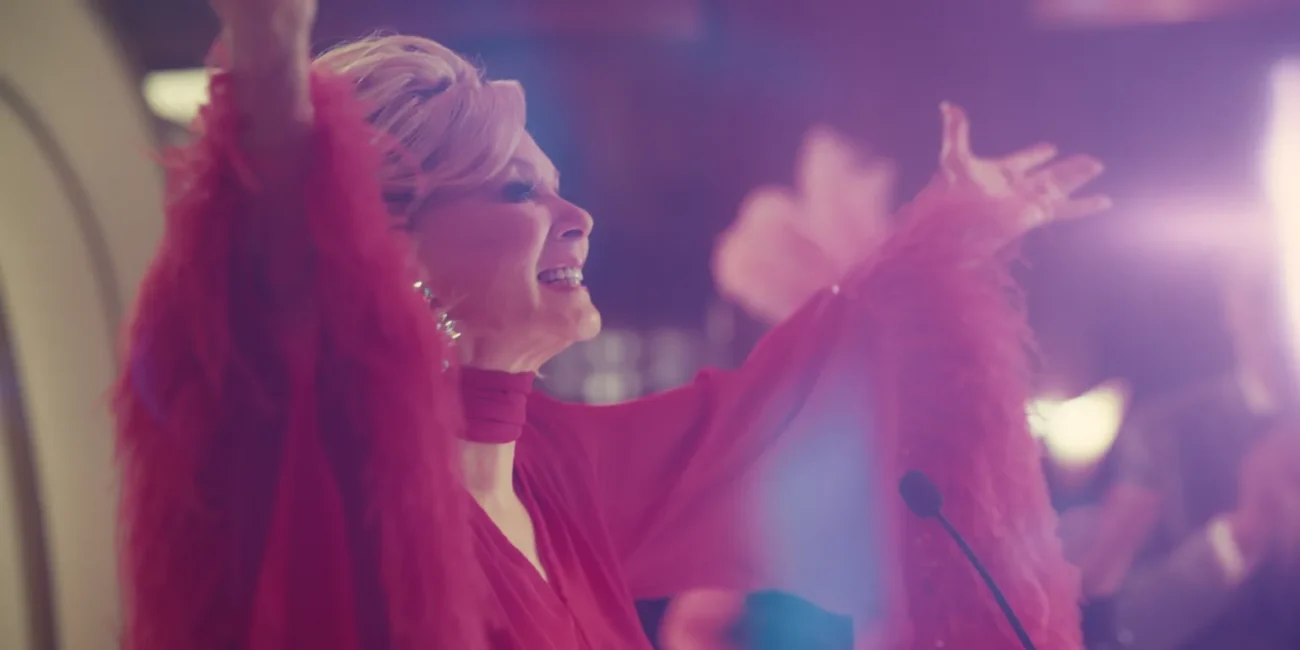
When we last left Deborah, she had torched her own talk show in the most Deborah Vance way imaginable, and now she’s paying for it. Bob Lipka Tony Goldwyn playing a man who has clearly never been told no in his adult life, the Ted Sarandos of this fictional universe has effectively frozen her out of every platform worth caring about. No TV. No streaming. The internet is largely off-limits. For a woman whose entire identity is performance, whose self-worth is tied directly to whether there’s an audience in the seats, this isn’t just a career setback. It’s closer to an identity crisis, and Jean Smart plays the early episodes of this season with a particular kind of controlled desperation that’s uncomfortable to watch in the best way. You get the sense Deborah isn’t scared of failure she’s survived failure before. What scares her is irrelevance. Those are different things, and Smart knows it.
Recommended: The Drama (2026) Parents Guide
Her solution, naturally, is to go completely insane about it. In the season premiere, she tasks Jimmy, Kayla, and Randi with getting her an EGOT. Just like that. Hand it to them. The sequence that follows involves a cameo I genuinely did not see coming a Pulitzer Prize winner showing up in a context so unexpected and so committed that I actually laughed out loud and it sets the tone for a final season that is, somehow, as sharp as the show has ever been. The EGOT plan falls apart, because of course it does, and what replaces it is a campaign to headline Madison Square Garden: the kind of goal you set when you’re either very confident or very desperate, and with Deborah it has always been hard to tell which.
The Garden push drives most of the season, and it gives the writers room to take some genuinely surprising detours. HBO has asked critics to keep the specifics quiet, and I’ll respect that, except to say: there is an episode late in the run built almost entirely around Kaitlin Olson as Deborah’s daughter, and it’s the kind of hour that reminds you what this show is capable of when it trusts its performers completely. Olson has always been physically fearless in ways that most comedic actors aren’t even attempting you might remember her work on It’s Always Sunny in Philadelphia, where she regularly threw herself into humiliation with a kind of cheerful abandon and what she does here is something different, more grounded, and it’s remarkable.
What works best about this final season, though, isn’t any single episode or cameo or set piece. It’s a structural decision the writers made that I think saves the show from a trap it was starting to fall into. In seasons two and three, the push-pull between Deborah and Ava started to feel like the show’s default gear conflict, reconciliation, conflict again and while Einbinder and Smart are electric together, there’s only so many times you can watch two people who love each other refuse to say so before it starts to feel like a stall. This season, almost entirely, drops the antagonism. Ava and Deborah fight the industry together. They fight AI together, actually, which is one of the season’s quietly pointed ongoing concerns. And something that was always underneath the show’s dynamic genuine affection, real influence running in both directions gets space to breathe.
The finale earns its emotions. I won’t say how, but I will say I didn’t expect to feel what I felt watching it, and that’s not nothing. Series finales are almost always disappointing in one direction or another either they’re so conclusive they feel like a door slamming, or they’re so deliberately open-ended they feel like a shrug. This one threads that needle. You leave the show with the sense that the world continues, that Deborah and Ava keep living their lives past the frame, but you also feel the satisfaction of something completed. That’s genuinely rare.
Smart has given one of the great comedic performances in recent television history across these four seasons, and this final run is no exception. But Einbinder deserves more credit than she typically gets. She’s grown considerably as a performer, and watching her hold her own against Smart in their quieter scenes this season not the sparring scenes, the honest ones is its own reward. Megan Stalter, who started as a joke and became a character, is wonderful. Paul W. Downs has been underrated for years.
Recommended: The Testaments (2026) Parents Guide
I keep coming back to something the show understands that most shows set in the entertainment industry don’t: talent is exhausting. It’s not glamorous in the way outsiders imagine. It comes with a particular kind of anxiety that doesn’t go away with success sometimes success makes it worse and it’s been shaped differently for women of Deborah’s generation than for women of Ava’s. The show never preaches about that. It just shows you both of them living inside it, and trusts you to notice the difference.
Hacks Season 5 Parents Guide
Violence & Intensity: The show thrives on confrontation, and arguments between Deborah and Ava can cut deep. Verbal sparring often crosses into cruelty, especially when insecurities are exposed. There are moments of genuine vulnerability and quiet desperation, particularly around aging, relevance, and failure that may hit harder than anything physical. It’s not dangerous, but it is heavy.
Language: Profanity is used casually and often, strong language isn’t saved for emphasis, it’s just how these characters speak. Insults are creative and sometimes brutal, especially in industry settings where wit doubles as a weapon. The tone can swing from playful to biting in seconds, and while slurs are not a defining feature, the dialogue doesn’t shy away from offensive or uncomfortable phrasing when it serves the character.
Sexual Content / Nudity: References to sex, relationships, and past experiences come up frequently in conversation, usually played for humor or character insight rather than shock. There are occasional suggestive scenes or implications, but nudity is minimal to none. The show is more interested in the emotional and comedic side of intimacy than anything explicit.
Drugs, Alcohol & Smoking: Some characters use substances recreationally, and drug references pop up throughout, though it rarely becomes the central focus. It’s portrayed casually rather than glamorized, but it’s always there in the background.
Age Recommendations: Best suited for adults (17+). The themes—identity, aging, ambition, failure—require a level of maturity to fully understand, and the language alone makes it inappropriate for younger viewers. This isn’t a show built around shock value, but around honesty, and that honesty assumes an adult audience.
