Last Updated on February 28, 2026 by Monica Castillo
The moment that kept sneaking up on me afterward isn’t a punchline or a romantic beat. It’s a look. Amy Landecker, alone in a room full of people younger than her, clocking the faint, familiar terror of realizing the world has shifted its center and didn’t bother to notify you. I’ve seen that look before on friends, on strangers, on myself and that’s when I knew For Worse wasn’t just another divorce comedy trying to charm its way past middle age. It’s a film that knows exactly where the ache lives.
Landecker, who for years has been the queen of “wait, I know her from something,” finally puts her name above the title here, writing, directing, and starring. If this is her first turn behind the camera, it doesn’t feel tentative. It feels personal. Sometimes almost embarrassingly so. The good kind.
She plays Lauren, recently split from her husband Chase, portrayed with passive-aggressive gentleness by Paul Adelstein. They share a daughter, Kim, who is old enough to sense shifts in adult gravity but too young to name them. Chase, meanwhile, has moved on with Sara, a wellness influencer played by Angelique Cabral, whose breezy certainty about life, happiness, and green smoothies feels less like villainy than a cosmic insult. The film understands how divorce can make even decent people feel like personal affronts simply for continuing to exist.
Recommended: The Fall and Rise of Reggie Dinkins Parents Guide
Rather than spiral, Lauren does what people in Los Angeles do when the ground drops out beneath them: she signs up for an acting class. Not theater. Not film. Commercials. The class is run by Liz, a figure of such prickly authority and social obliviousness that she feels imported from some parallel universe where empathy was an elective. Gaby Hoffmann plays her with frightening conviction barefoot, braless, barking “Places!” like a drill sergeant who wandered into the wrong profession. Liz believes, deeply and without irony, that selling toothpaste is an art. The joke is that she might be right.
The class drops Lauren into a generational petri dish. Everyone else is younger, cooler, fluent in references that slide past her like a foreign language she once meant to learn. The film doesn’t rush this discomfort. It lets it sit. Then, quietly, it shifts. Lauren delivers a monologue—not flashy, not thirsty and suddenly the room sees her. Not as a curiosity. As someone real. From that point on, she becomes the hip, slightly wounded aunt of the group, and the movie starts to open outward instead of curling in on itself.
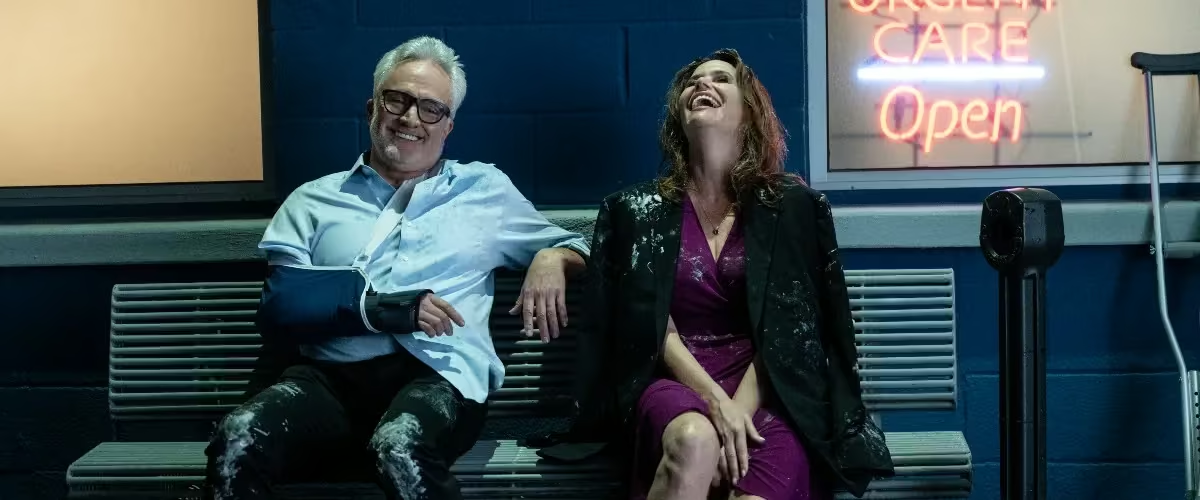
That expansion leads to a wedding weekend for one of her classmates, Maria, played by Kiersey Clemons, who’s marrying her partner Justine (Briana Venskus). The guest list includes Maria’s exasperated, generous mother (Enuka Okuma), her well-meaning stepfather (Jay Lacopo), and her biological dad, Dave, played by Bradley Whitford. Whitford and Landecker share the kind of ease that can’t be faked. The movie doesn’t rush what we already know is coming. It trusts chemistry. A rare thing.
There’s also Sean, a fellow student played by Nico Hiraga, who walks into scenes like gravity has briefly been reprogrammed. When he suggests they rehearse an explicit scene together on his futon, the film doesn’t leer or scold. It lets Lauren feel thrilled and foolish and clear-eyed all at once. I kept thinking about how rarely movies allow women her age to feel desire without punishing them for it.
Yes, you’ve seen versions of this story before. Divorced person rebuilds life through performance. If you’ve ever watched Is This Thing On? or remember how The Larry Sanders Show taught Hollywood to laugh at itself, some of this terrain will feel well-worn. Landecker knows that. She doesn’t pretend otherwise. What she offers instead is specificity. People who behave like people. Dialogue that sounds overheard rather than engineered.
Recommended: The Bluff 2026 Parents Guide
As a director, Landecker sometimes steps back a little too far. You can feel her instinct to protect the actors, to give them room, to let scenes play without interference. That generosity is admirable, but it also means the movie occasionally settles for recording moments instead of shaping them. And yet every so often she breaks her own pattern. A stretch of slow motion catches an emotional undercurrent you didn’t realize had been running beneath the scene. A pause lingers just long enough to turn awkwardness into revelation. Those flashes made me lean forward, because they suggest a filmmaker who’s still discovering how much power she’s allowed to claim. I hope she claims more of it next time.
What carries the film, ultimately, is its faith in actors. Hoffmann’s Liz could have drifted into caricature, but she stays grounded, terrifyingly competent, and weirdly plausible. Even the smallest roles register. Carlos Valdez, as Liz’s overworked assistant, looks like a man negotiating an unspoken hostage crisis. Spencer Stevenson appears briefly as a wedding guest and somehow makes it feel like an entire friendship could bloom offscreen.
The wedding sequence delivers the expected chaos, but it lands because the film never winks at its own mechanics. It believes these things could happen. More importantly, it believes they matter, even when they’re ridiculous.
For Worse doesn’t tie life up neatly. It doesn’t insist growth looks heroic or tidy. It just watches a woman stumble, recalibrate, and discover that the mess she’s standing in might be the shape of her next chapter. When the credits rolled, I didn’t feel instructed or comforted. I felt recognized. And that’s a harder thing to pull off than a happy ending.
For Worse (2025) Parents Guide
Rating: Not Rated R by the MPA
Violence & Intensity: There’s almost no physical violence. Tension comes from emotional situations divorce, jealousy, and awkward confrontations. Arguments can sting, but nothing here is graphic or threatening. The intensity is all about feelings, not fists.
Language (profanity, slurs, tone): Expect some casual profanity—“damn,” “shit,” and the occasional stronger word. No racial or homophobic slurs. The tone is conversational, sometimes sharp, but never cruel in a way that feels unsafe for older teens.
Sexual Content / Nudity: There’s talk of dating, attraction, and one rehearsal scene that’s a little risqué, handled more for character tension and awkward humor than titillation. Landecker and Hoffman’s characters show a casual approach to nudity barefoot, braless, personal space stretched for laughs but nothing crosses into explicit territory. It’s adult life observed, not dramatized.
Drugs, Alcohol & Smoking: Alcohol appears occasionally wine or cocktails at gatherings and rehearsals. Some characters smoke socially, mostly at parties or weddings. No illegal drug use is glamorized, though tapwater-only futons get highlighted.
Age Recommendations: Late teens and up will grasp the humor, nuance, and emotional beats. Younger viewers may find the themes of divorce, dating, and desire confusing or emotionally heavy. This is a film for audiences comfortable with adult life’s messy, sometimes awkward realities rather than cartoonish morality.
Recommended :Last Ride (2026) Parents Guide
