Last Updated on April 14, 2026 by Monica Castillo
.It begins with a familiar setup. Bethany (Charli XCX) and her boyfriend Rob (Will Madden) arrive in Warsaw for what’s meant to be a romantic escape. Rob has done the work: reservations, thoughtful gestures, a sense of occasion hovering over everything. You don’t need the film to tell you what’s coming, he’s planning to propose. It’s written all over the way he watches her, like he’s already stepped into a future she hasn’t quite agreed to.
Bethany reconnects almost immediately with Nel (Lena Góra), a florist she met years earlier on a school trip. Their origin story is the kind of detail that sounds almost absurd until you see how the film uses it: they met during a volcanic eruption, and the two of them have half-jokingly, half-seriously decided that their connection caused it. It’s playful, but it’s also revealing. For them, intensity equals meaning. Chaos becomes proof of something real.
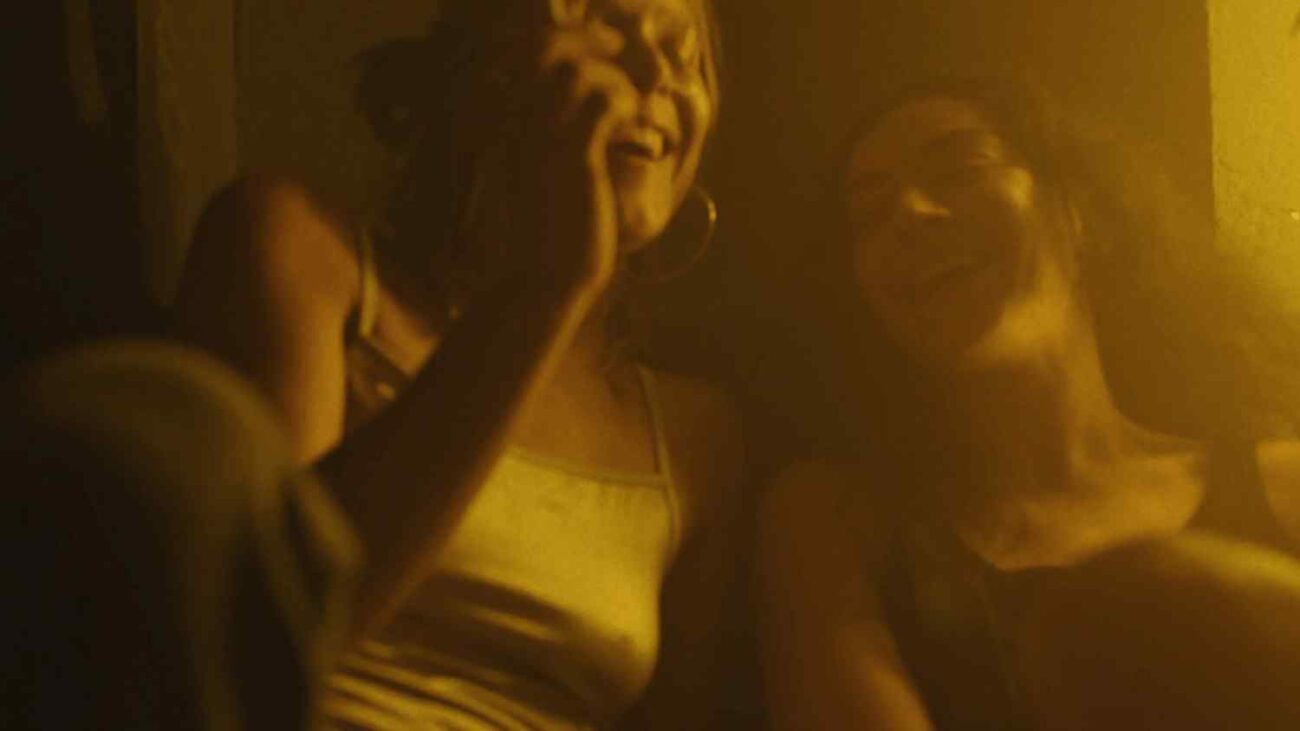
Whenever they’re together, everything else drops away.
The nights they spend drifting through Warsaw have that loose, slightly dangerous energy of people who don’t want to be found. Responsibilities partners, expectations, plans are treated like things you can just step out of for a while. The film doesn’t glamorize it exactly, but it doesn’t judge it either. It just lets you feel how seductive that freedom is, especially if you’re someone like Bethany, who seems quietly suffocated by the life she’s supposed to want.
Highly Recommended: If Movie Parents Guide
She leaves Rob almost as soon as they arrive. Not dramatically, not with a fight, just a kind of casual disappearance that’s somehow worse. When she comes back the next morning, there’s a moment that stuck with me: Rob wakes up and finds her in the kitchen, wrapped in a towel, making coffee. It looks like a life. It looks like stability. And yet there’s something off about it, like she’s trying on a version of herself that doesn’t quite fit.
Rob, to his credit, isn’t written as a fool. He’s patient, attentive, genuinely invested. He wants to be the steady presence in her life, the one she can come back to when everything else burns out. But the film is honest about how that kind of devotion can start to feel one-sided. He keeps reaching for her emotionally, and she keeps giving him just enough to keep things going, never enough to let him all the way in.
Nel isn’t much different, which is part of the point. She’s involved with Ula (Agata Trzebuchowska), but there’s a distance there too. Ula is direct about what she wants, time, attention, something defined, and Nel resists it at every turn. There’s a telling contrast between Ula and Rob: both want something real, but Ula has clearer boundaries. She won’t chase someone who keeps pulling away. Rob, on the other hand, keeps waiting, keeps hoping Bethany will eventually meet him where he is.
The film itself doesn’t push these dynamics into confrontation. It just lets them sit there, unresolved, which feels closer to how these situations actually play out. There’s narration threading through it, Jacek Zubiel moving between Polish and English, between Bethany and Nel’s perspectives and it gives the whole thing a slightly literary texture. At times it works, adding a sense of interiority. At other moments, I found myself wishing the film trusted its images a bit more. There’s already so much being communicated in the silences.
Performance-wise, Lena Góra lingers in your mind. She plays Nel with a kind of guarded opacity, you’re always aware there’s more going on beneath the surface, but she never fully lets you see it. It makes her scenes feel charged, even when nothing much is happening. You understand why Bethany is drawn to her, even if you’re not sure it’s good for either of them.
Jeremy O. Harris shows up as Claude, an American painter who slips easily into their orbit. He’s a welcome presence looser, warmer, not tangled up in the same emotional knots. There’s a lightness to him that the film needs at that point, someone who can exist around the chaos without being consumed by it.
Trzebuchowska doesn’t get much screen time, but she uses it well. Ula feels like the only character who’s fully aware of her own limits. She wants Nel, but not at the cost of her self-respect, and the film quietly respects that.
Highly Recommended: My Demon Parents Guide
But it’s Charli XCX who carries the film, and she does it in a way that’s more introspective than you might expect. There’s an obvious connection to the persona she’s explored in Brat, the nightlife, the hedonism, the sense of living intensely in the moment but here it’s tempered by something more searching. Her Bethany isn’t just partying for the sake of it. She’s looking for something, even if she doesn’t have the language for it yet.
What stayed with me is how the film captures that split between night and morning. At night, everything feels possible, music, bodies, movement, a kind of shared energy that makes you forget yourself. And then morning comes, and with it a sharper awareness of where you are, who you’re with, what you’ve been avoiding.
“Erupcja” doesn’t resolve that tension. It doesn’t try to tell you whether Bethany should stay with Rob, or choose Nel, or walk away from both. It’s more interested in the space she’s in the uncertainty, the pull between stability and freedom, between being known and remaining unknowable.
And by the end, you realize the eruption the title hints at isn’t something we’re meant to see. It’s already happened, quietly, in the way these characters can no longer pretend they want the same things.
Erupcja Parents Guide
Not rated by the Motion Picture Association (MPA)
Violence & Intensity
There’s no physical violence to worry about. What lingers instead is emotional tension—the kind that comes from people avoiding hard truths. The film sits in that discomfort for long stretches: strained conversations, quiet disappointment, the sense that something is off even when nothing is being said outright. It’s not overwhelming, but it can feel heavy in a more personal, reflective way.
Language: The language is casual and realistic. Characters swear the way people do in everyday life, especially in relaxed or late-night settings, but it never tips into anything aggressive or excessive. There are no notable slurs. The tone, more than the words themselves, carries the weight, conversations can feel raw or emotionally guarded.
Sexual Content / Nudity: There’s some mild sexual content, handled in a low-key, naturalistic way. You’ll see brief partial nudity nothing explicit and moments that suggest intimacy rather than show it. The film is more focused on emotional closeness and attraction than anything graphic, but the themes are clearly adult.
Drugs, Alcohol & Smoking: Alcohol use is frequent. Much of the film unfolds around nights out drinking, dancing, drifting from one place to another. It’s not framed as dangerous, but it is constant, and you can see how it feeds into the characters’ impulsive choices. There’s no strong focus on drugs, but the overall atmosphere leans into a party lifestyle.
Age Recommendations
Best suited for 16+ or 17+. Not because it’s explicit, but because it deals with complicated relationships, emotional distance, and the kind of uncertainty that comes with early adulthood.
Highly Recommended: Outcome (2026) Parents Guide
