Last Updated on March 20, 2026 by Monica Castillo
There is something particular about the experience of watching a great children’s film. It’s not just that kids are enchanted though they are, often visibly, irrevocably so. It’s that the best of these movies quietly double as mirrors for whoever is doing the watching. A six-year-old sees a robot learning to love. Her mother, beside her on the couch, sees something she can’t quite name some old ache about belonging, about survival, about the terrible cost of caring for something that will eventually leave. That’s what separates art from entertainment, even in the kids’ section. Netflix, for all its algorithmic ruthlessness, has somehow assembled a library in 2026 that actually contains both. Here are the 25 best children’s movies streaming on the platform right now reviewed not just for what they are, but for what they mean.
1. The Wild Robot (2024)
- Genre: Animated Adventure/Drama
- Rating: PG
- IMDB Rating: 8.2/10
- Rotten Tomatoes Tomatometer: 98%
- Rotten Tomatoes Audience Score: 98%
- Common Sense Media Age Recommendation: 6+ years
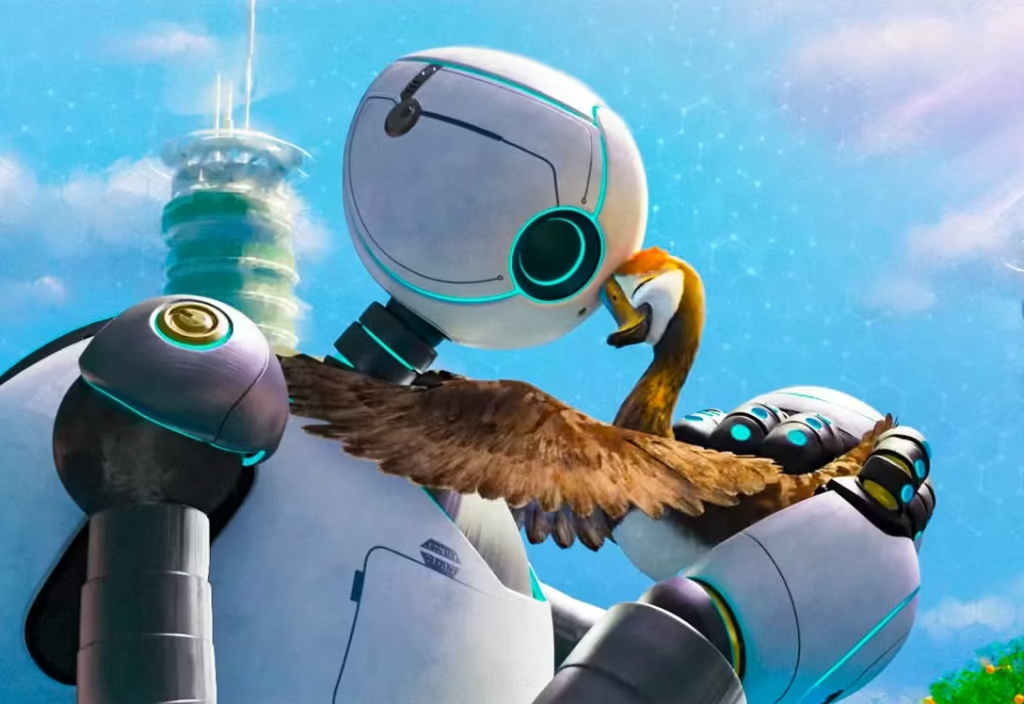
A cargo ship goes down in a storm. Crates wash up on an uninhabited island. One of them opens, and out steps Roz ROZZUM unit 7134, a sleek, blinking, purpose-built service robot who has absolutely no idea what to do with mud, geese, and the relentless, unfeeling logic of nature. That’s where The Wild Robot begins, and director Chris Sanders, working from Peter Brown’s beloved novel, wastes no time on backstory or exposition. Roz is here, the island is indifferent, and the animals are afraid of her. She gets to work anyway.
What follows is one of the most quietly stunning animated films in recent memory a movie that describes itself as a story about a robot learning to be a mother, and then spends its entire runtime proving that this premise contains multitudes. When Roz accidentally destroys a goose nest and the only surviving egg hatches in her metal arms, she doesn’t have a protocol for this. She improvises. She watches other animals parent. She fails, spectacularly and repeatedly, in ways that are both funny and if you’ve ever been new at something that mattered deeply familiar.
The gosling, Brightbill (Kit Connor, whose voice carries a teenager’s particular cocktail of bravado and vulnerability), is not exactly grateful. He’s embarrassed. He wants a real mother. This is where Sanders does something genuinely brave: he doesn’t rush past the rejection. He sits in it. You can feel Roz processing the wound not emotionally, she’s a robot but functionally, and the gap between those two things slowly, almost imperceptibly, closes.
Lupita Nyong’o voices Roz with a restraint that borders on the revelatory. There’s no theatrical warmth early on, no calculated sweetness. The emotion arrives late, and it arrives honestly, because Nyong’o has earned every note of it. Pedro Pascal as the wily fox Fink provides the film’s comedic oxygen without once deflating its emotional pressure. And the late Catherine O’Hara, as Pinktail the opossum, contributes a performance that is somehow both cartoonish and heartbreaking often in the same sentence.
The animation deserves its own paragraph. Sanders calls it “a Monet painting in a Miyazaki forest,” and this is not just promotional language it’s accurate. There’s a luminous softness to the visual style that contrasts beautifully with the film’s harder thematic content: survival, loss, the way love can survive distance. The seasonal rhythms of the island the blazing greens of summer, the brutal whites of winter feel genuinely alive in a way that most animated films only approximate.
The Wild Robot takes several swings at your composure in its final act. It lands all of them. This is, without exaggeration, one of the great animated films of the decade.
2. Klaus (2019)
- Genre: Animated Fantasy/Comedy
- Rating: PG IMDB Rating: 8.2/10
- Rotten Tomatoes Tomatometer: 96%
- Rotten Tomatoes Audience Score: 94%
- Common Sense Media Age Recommendation: 6+ years
Klaus opens in a place of genuine darkness not the cartoonish darkness of a villain’s lair, but the gray, institutional darkness of mediocrity. Jesper is the worst student at the Royal Postal Academy, the spoiled son of a Postmaster General who has run out of patience for his son’s laziness. As punishment, Jesper is shipped to Smeerensburg, a miserable frozen town in the far north where two feuding clans have spent generations hating each other so thoroughly that nobody sends any letters. If Jesper doesn’t deliver six thousand letters in a year, he loses his allowance. He goes looking for a shortcut. He finds Klaus.
Director Sergio Pablos who spent decades as an animator at Disney before launching his own studio made Klaus as a declaration of principle. This would be the first traditionally hand-drawn animated feature to ever receive a Netflix Original designation, and it would prove something: that the old art form still breathed, still moved, still could reach inside you and rearrange things. He was right, and then some.
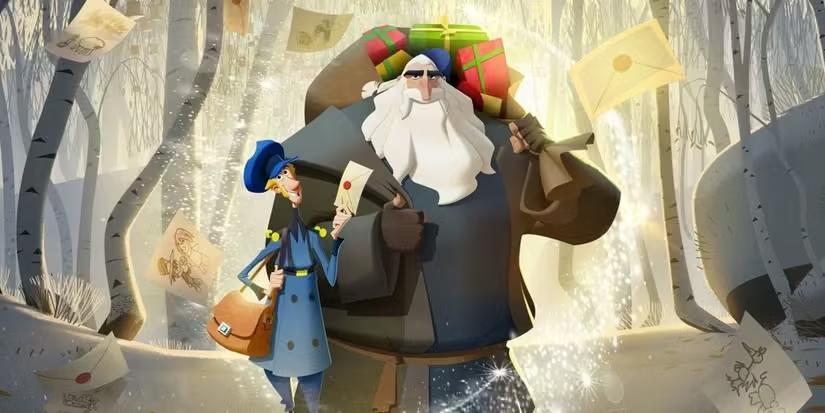
The film’s origin-story conceit for Santa Claus is clever without being precious. Klaus (J.K. Simmons, magnificently gruff and warm) is not yet the jolly red man of mythology he’s a solitary woodsman, enormous and bearded, living alone with a workshop full of handmade toys no child has ever received. When Jesper stumbles into his life and discovers that Klaus has been crafting toys in secret for years, the two hatch an unlikely partnership: deliver the toys to children, generate letters, save Jesper’s allowance. The selfish calculation at the heart of this arrangement is exactly what makes it work dramatically, because we get to watch generosity grow where cynicism was planted.
Joan Cusack, Rashida Jones, and Will Sasso fill out an ensemble that gives the town genuine texture these feuding families feel like real people whose spite has calcified into habit, and the film is wise enough not to dissolve that hostility cheaply. The reconciliation, when it comes, earns its warmth.
What Pablos achieves with light in Klaus is simply extraordinary. The film uses a proprietary illumination technique that makes traditional 2D animation appear three-dimensional figures seem to breathe, lamp glow falls across faces in ways that feel almost tactile. It’s the most beautiful animation of that year, full stop, and it remains one of the most beautiful animated films on any streaming platform today.
The ending is something. You might remember the first time you understood that the story of Santa Claus was always really a story about the persistence of kindness how it outlasts the people who carry it, how it finds ways to survive. Klaus understands this, too, and it gives the idea a visual form that is staggeringly lovely.
3. The Mitchells vs. the Machines (2021)
- Genre: Animated Sci-Fi Comedy
- Rating: PG IMDB Rating: 7.7/10
- Rotten Tomatoes Tomatometer: 97%
- Rotten Tomatoes Audience Score: 92%
- Common Sense Media Age Recommendation: 7+ years
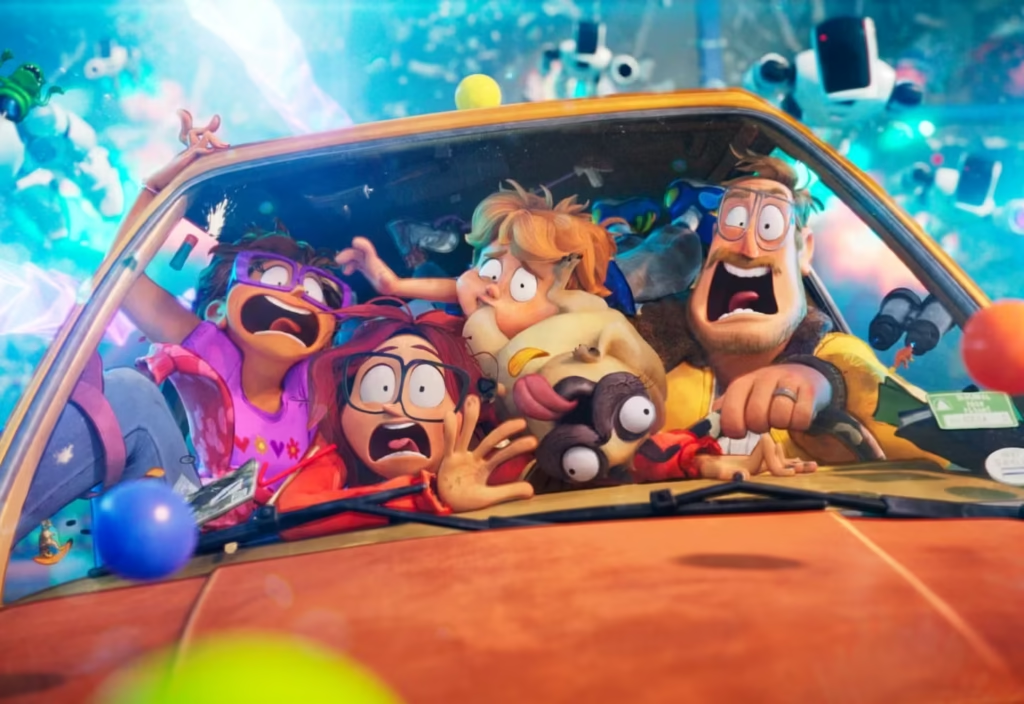
Katie Mitchell is about to leave for film school when the machines rise up. This is a sentence that reads absurdly, but in the world of director Michael Rianda’s chaotic, exhilarating animated debut, it makes perfect emotional sense because the robotic apocalypse arrives on exactly the day that Katie and her father were already fighting a different kind of battle, the deeply human one about growing up and growing apart. The Mitchells dad Rick (a man-of-the-land type bewildered by his daughter’s art-school ambitions), mom Linda (cheerful, catastrophically optimistic), younger brother Aaron (a dinosaur obsessive), and their spectacularly weird dog Monchi happen to be on a road trip when humanity gets rounded up by robots. They are, by pure accident, the last family standing.
What Rianda and producer Phil Lord (yes, that Phil Lord, of The LEGO Movie and Into the Spider-Verse fame) have constructed here is one of those rare animated films that is equally, simultaneously, genuinely funny and genuinely moving. The comedy is fast and layered and self-aware the film borrows the visual grammar of social media, meme culture, and lo-fi internet video in ways that feel alive rather than desperate. But the heart of the thing is always the relationship between Katie and Rick, two people who love each other and have absolutely no idea how to talk to each other.
Abbi Jacobson voices Katie with a nervy, hopeful energy, and Danny McBride gives Rick a thick-necked, well-meaning cluelessness that never tips into caricature. There’s a scene near the end I won’t spoil it where Rick watches one of his daughter’s homemade movies, and it is one of the most quietly devastating things to appear in a children’s animated film since Pixar’s Up. You’ll feel it differently depending on where you’re sitting: as a kid, or as a parent.
The film was nominated for Best Animated Feature at the Academy Awards (losing to Encanto), and deserved every inch of that recognition. It’s also worth noting that Katie is presented as LGBTQ+ without announcement or fanfare she simply is who she is, and the film treats this as the unremarkable, lovely thing it should be.
4. How to Train Your Dragon (2010)
- Genre: Animated Adventure/Fantasy
- Rating: PG IMDB Rating: 8.1/10
- Rotten Tomatoes Tomatometer: 99%
- Rotten Tomatoes Audience Score: 90%
- Common Sense Media Age Recommendation: 6+ years
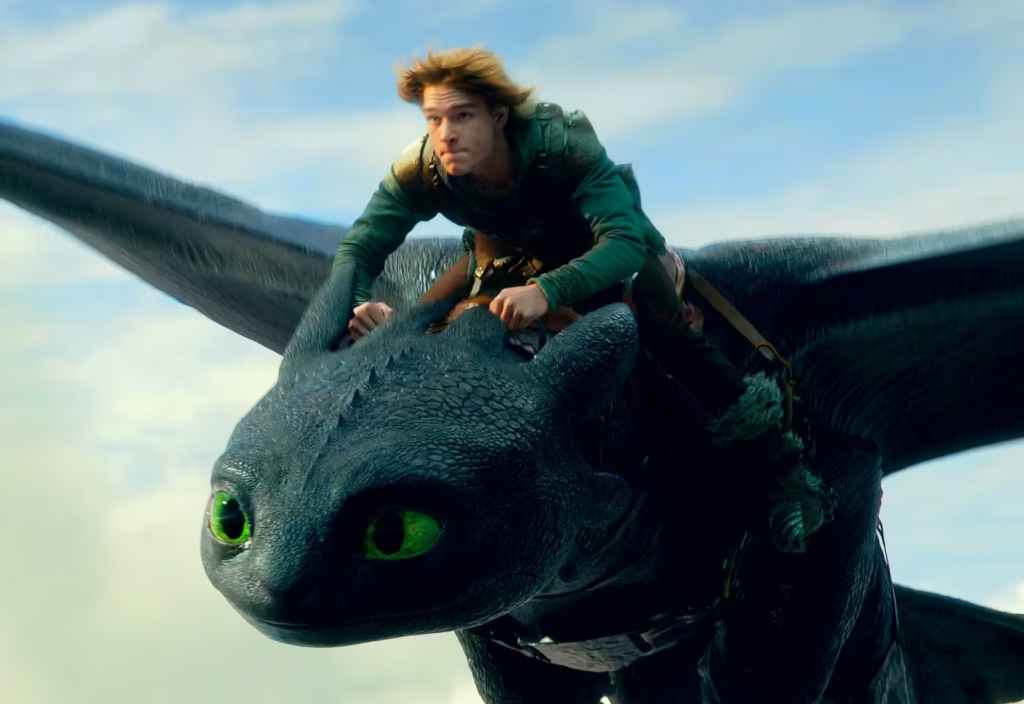
There is a moment early in How to Train Your Dragon you’ll know it when you get there where Hiccup, the scrawny, overlooked son of a Viking chief, first encounters the wounded dragon he’s spent the whole village’s history being trained to fear. The dragon is cornered. Hiccup raises his knife. And then something happens between them a small, tentative thing, a gesture of mutual vulnerability so simply and purely rendered that it unlocks the entire rest of the movie in a single breath. Directors Dean DeBlois and Chris Sanders (yes, the same Chris Sanders who made The Wild Robot) understood exactly what they had in that moment. They let it breathe.
How to Train Your Dragon is, on its surface, a film about a boy and his dragon. It is, somewhat deeper, a film about being wrong about the specific courage it takes to look at something your culture has told you to hate and decide, quietly and at great personal risk, to look again. Hiccup’s relationship with Toothless the Night Fury dragon is one of the great cross-species friendships in cinema history, and what makes it work is that it’s built on genuine mutual respect rather than cute-animal magic. Toothless is never fully domesticated. He is always, in some irreducible way, his own creature.
Highly Recommended: Family Movie 2026 Parents Guide
The flying sequences in this film were a genuine revelation in 2010 and they remain breathtaking now DreamWorks Animation at its peak physical storytelling, all swooping perspectives and rush of wind and that particular teenage euphoria of discovering something that makes the whole world feel different. John Powell’s score is among the greatest in animated film history, an Irish-inflected orchestral swell that seems to expand time itself.
That this film has arrived on Netflix in 2026 alongside its sequel feels like a gift. Watch them back to back. Bring tissues for the second one.
5. How to Train Your Dragon 2 (2014)
- Genre: Animated Adventure/Fantasy
- Rating: PG IMDB Rating: 7.8/10
- Rotten Tomatoes Tomatometer: 92%
- Rotten Tomatoes Audience Score: 88%
- Common Sense Media Age Recommendation: 6+ years
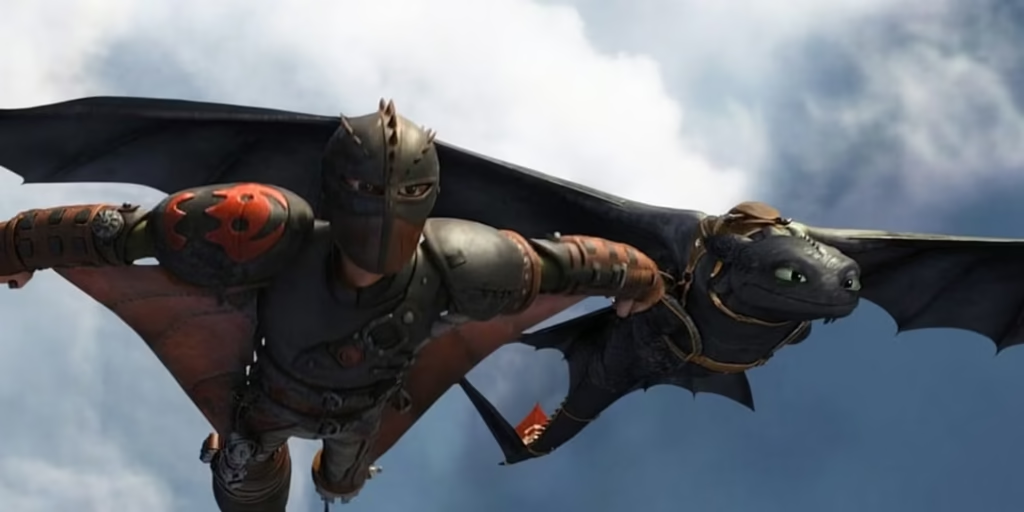
Five years after the first film, Hiccup is twenty now lanky, still awkward, still unwilling to take the chief’s mantle his father wants to press into his hands. He’d rather explore the world. He and Toothless have become cartographers of the unknown, and the film opens in a spirit of genuinely giddy freedom, the two of them banking through clouds above unmapped islands. Then the world intrudes. It always does.
DeBlois, directing solo this time, makes a decision in How to Train Your Dragon 2 that very few animated sequels have the nerve to make. He introduces real grief. Not the softer, recoverable kind that characterizes most family film tragedy but something more permanent, more shaking, more honest about what the world costs. When it arrives, it arrives without warning, and the film holds its camera on the aftermath without flinching. Children in the audience will be upset. This is, counterintuitively, one of the most valuable things this movie does for them.
The new characters including a mysterious dragon-riding figure whose identity becomes the film’s emotional centerpiece are drawn with real complexity. Cate Blanchett voices one of them with a bruised radiance that gives the film’s heartbreak a human shape. The action sequences are even more inventive than those of the first film, but what lingers is something smaller: a boy learning that his hero is flawed, that his world is more complicated than he knew, that growing up means carrying things you didn’t ask to carry.
This is a better film than most animated sequels. It may be a better film, full stop, than many things you’ll find anywhere.
6. The LEGO Movie (2014)
- Genre: Animated Comedy/Adventure
- Rating: PG IMDB Rating: 7.7/10
- Rotten Tomatoes Tomatometer: 96%
- Rotten Tomatoes Audience Score: 87%
- Common Sense Media Age Recommendation: 6+ years
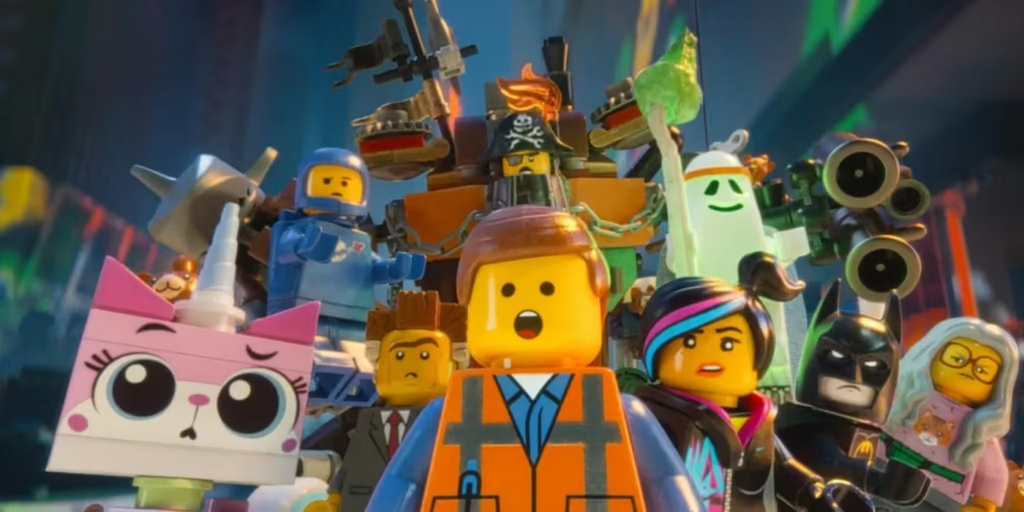
Nobody expected The LEGO Movie to be a work of genuine cinematic intelligence. It was a movie based on a toy. The pre-release consensus was corporate cynicism dressed in primary colors. What Phil Lord and Christopher Miller delivered instead was one of the most formally inventive animated films of the 2010s a movie that uses the specific grammar of LEGO bricks (their physicality, their interchangeability, their relationship to a child’s imagination) to tell a story about creativity, conformity, and the terrifying gap between following instructions and trusting yourself.
Emmett is a construction-worker LEGO minifigure who follows every rule in the book. He watches the same TV show as everyone else, orders the same coffee, says the same cheerful things. He is, by every measure, ordinary. Then he stumbles upon the Piece of Resistance a legendary artifact that supposedly identifies him as “The Special,” the one prophesied to save the world from the tyrannical President Business (Will Ferrell, doing something genuinely sinister underneath all the gags). Emmett, who has never had an original thought in his life, is now supposed to be the most creative person in the universe. The irony is perfect.
What Lord and Miller do with this setup is genuinely remarkable. They let the irony be the point. Emmett’s ordinariness is not a flaw to be overcome it’s a perspective that turns out to matter, that turns out to be a kind of strength. The film’s late-third-act revelation which most parents will see coming and children absolutely will not reframes everything that preceded it in ways that are surprisingly affecting.
Highly Recommended: Easter 2026 Family Film Guide For Kids: What’s Worth Watching in Cinemas
“Everything is Awesome” will lodge itself in your cerebral cortex and refuse to leave. This is not a complaint. The film is now twelve years old, which means it’s probably older than the children who’ll be discovering it on Netflix this month. For them, it’ll feel like something new. For you, it may feel like a reminder of everything that seemed possible once. That’s the kind of movie it is.
7. Matilda (1996)
- Genre: Fantasy/Comedy
- Rating: PG IMDB Rating: 7.0/10
- Rotten Tomatoes Tomatometer: 90%
- Rotten Tomatoes Audience Score: 88%
- Common Sense Media Age Recommendation: 6+ years
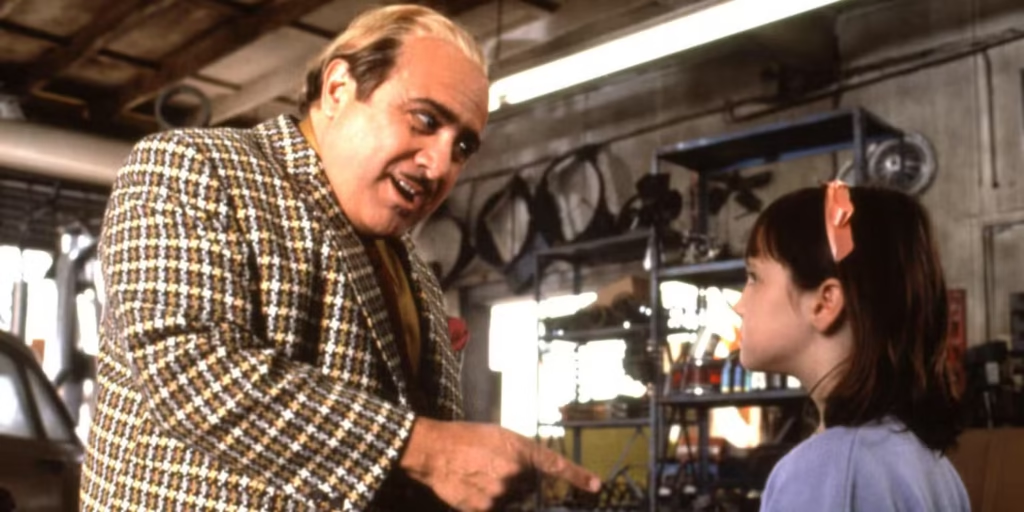
Danny DeVito directs with relish the kind of story that children have always needed: the one where the cruelest adults in the room get exactly what they deserve. Matilda Wormwood is seven years old, reads voraciously, and has parents (DeVito and Rhea Perlman) who barely acknowledge her existence. Her headmistress, Miss Trunchbull (Pam Ferris, in a performance of joyous monstrousness), runs her school like a Victorian labor camp. Matilda, it turns out, is telekinetic. You can already feel the satisfaction building.
What distinguishes Matilda adapted from Roald Dahl’s novel with screenplay by Nicholas Kazan and John Middleton is not its wish-fulfillment fantasy, delightful as that is, but its emotional honesty about what it feels like to be a child in a world that doesn’t see you. Mara Wilson plays Matilda with a peculiar, affecting gravity she is not a precocious-TV-child performance, but something more real, more interior, more quietly furious. When Matilda retreats to the library to read, you understand it as survival, not whimsy.
Miss Honey (Embeth Davidtz) arrives as the teacher Matilda should have had all along, and the tenderness between them is the film’s true romance a love story about what it means for a child to finally be seen by an adult who is worth being seen by. DeVito, who also narrates the film with a dry, conspiratorial warmth, understands Dahl’s fundamental principle: that children deserve stories where their intelligence is respected and their suffering is taken seriously. Matilda holds that line throughout.
The film is gleefully, unapologetically dark in places, and this is a feature, not a bug. Dahl understood that children live in a world that often treats them badly, and that giving them stories where that badness is acknowledged and then defeated is a form of respect. Netflix has brought Matilda back to the streaming library this March. Welcome home.
8. My Father’s Dragon (2022)
- Genre: Animated Adventure/Fantasy
- Rating: PG IMDB Rating: 7.0/10
- Rotten Tomatoes Tomatometer: 90%
- Rotten Tomatoes Audience Score: 81%
- Common Sense Media Age Recommendation: 5+ years
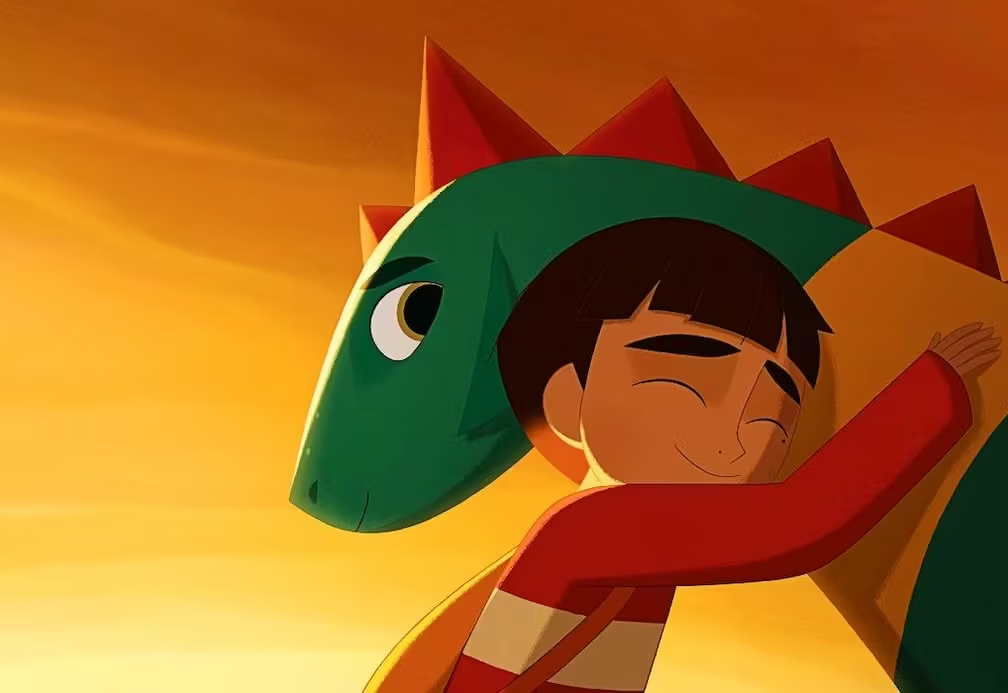
Nora Twomey who previously directed the devastating and beautiful The Breadwinner for Cartoon Saloon brings the same studio’s lyrical, hand-crafted visual sensibility to Ruth Stiles Gannett’s 1948 children’s novel, and the match is astonishingly right. My Father’s Dragon is ostensibly a quest story: young Elmer, anxious and overwhelmed after his family’s move from their comfortable home to a cramped city apartment, sneaks away to Wild Island to rescue a captive baby dragon named Boris. But Twomey is doing something more interior than adventure here this is really a film about a child trying to metabolize loss and change, and using the logic of fantasy to do it.
The Cartoon Saloon aesthetic those flat planes of color, those elaborate background paintings that suggest medieval illuminated manuscripts gives the island a visual quality unlike anything else in contemporary animation. Wild Island breathes. It has weather. The animals who hold Boris captive (a gorilla, a rhino, a lion, among others) are rendered with a weight and a weariness that suggests genuine interiority they are not simply obstacles for Elmer to outwit, but creatures with their own fears and attachments.
Jacob Tremblay voices Elmer with a nervous, big-hearted sincerity. Gaten Matarazzo is Boris, and there is an effervescent joy in his performance that makes the dragon’s captivity feel genuinely heartbreaking. The film doesn’t rush its emotional business it understands that children absorb heavy things slowly, and it gives them time.
This is a quieter, less commercially ambitious film than many on this list. It’s also, in its patient way, one of the most genuinely moving. Twomey trusts her young audience completely.
9. The Sea Beast (2022)
- Genre: Animated Action/Adventure
- Rating: PG
- IMDB Rating: 7.2/10
- Rotten Tomatoes Tomatometer: 91%
- Rotten Tomatoes Audience Score: 80%
- Common Sense Media Age Recommendation: 7+ years
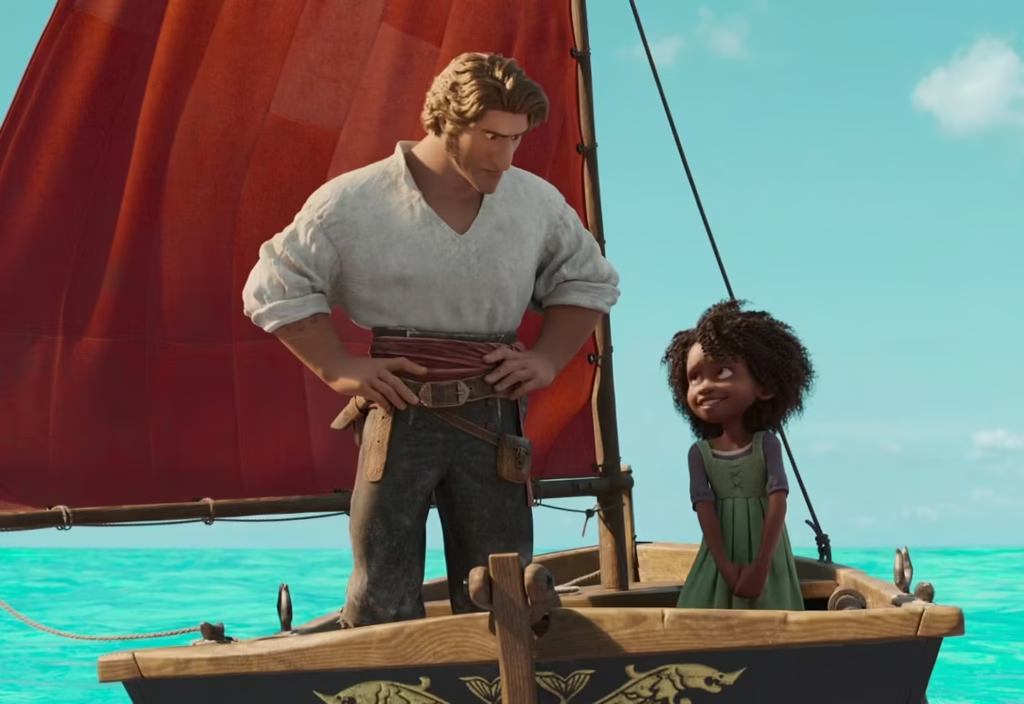
Chris Williams who co-directed Big Hero 6 and Bolt at Disney before jumping to Netflix made The Sea Beast as though he had a particular argument to settle. The argument goes roughly like this: monster-hunting adventure stories for children have always had monsters in them, but rarely have they asked whose story the monsters might be telling. The Sea Beast asks that question, loudly and without apology, and the answer reshapes everything.
Jacob Holland is the greatest monster hunter alive, right-hand man to Captain Crow (Jared Harris, magnificent and tragic), the legendary one-eyed sea captain who has made a career a mythology, really out of slaying the great beasts of the deep. Then a stowaway girl named Maisie (Zaris-Angel Hator, fiercely voiced) sneaks aboard, and eventually the two of them encounter Red the most feared monster of all and discover that she is not what the stories said. None of the beasts are. The stories, it turns out, have been shaped by powerful people for self-serving reasons. This is a children’s movie, yes. It is also about propaganda.
The oceanic animation in The Sea Beast is some of the most ambitious work Netflix has ever commissioned. The water moves with a credibility that would make a Pixar water engineer weep with envy. The creatures enormous, strange, glowing in deep-sea bioluminescence are designed with a genuine strangeness that suggests a world that predates human mythology entirely. Williams gives his action sequences the sweeping, slightly reckless energy of old adventure serials, but he never lets spectacle drown character.
The relationship between Jacob and Maisie is the film’s anchor: two people who have both built their identities around inherited narratives, slowly learning to see more clearly. It’s a lesson that arrives without lecturing, which is the only way lessons in children’s films should ever arrive.
10. Over the Moon (2020)
- Genre: Animated Musical/Fantasy
- Rating: PG IMDB Rating: 6.6/10
- Rotten Tomatoes Tomatometer: 82%
- Rotten Tomatoes Audience Score: 84%
- Common Sense Media Age Recommendation: 6+ years
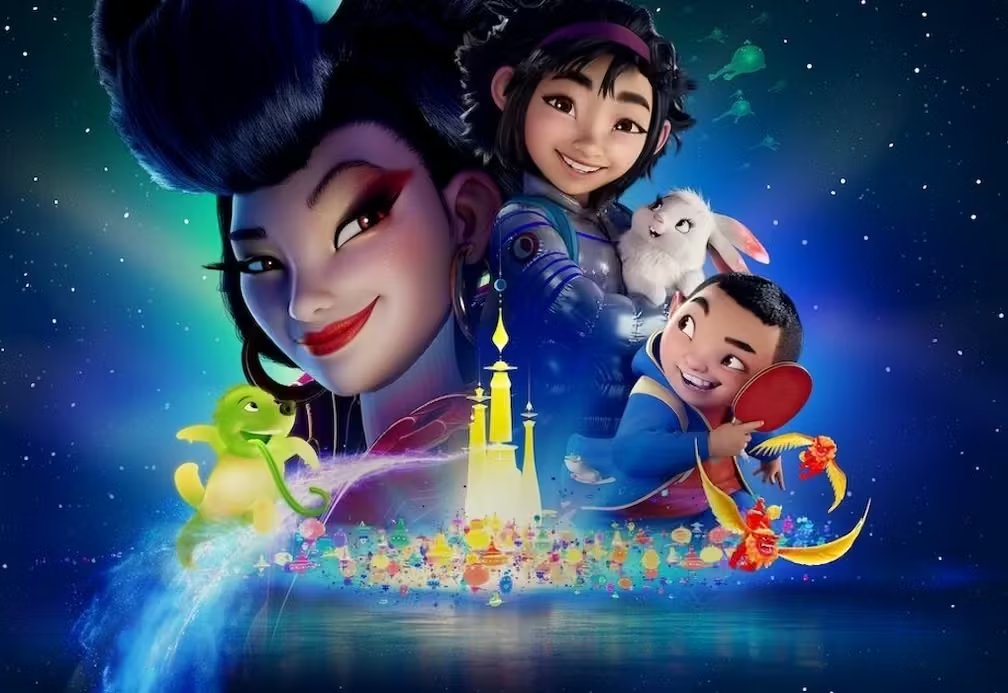
Fei Fei is thirteen, and her mother is dead, and her father is about to remarry, and she is going to build a rocket and fly to the moon to prove that the Moon Goddess Chang’e is real and that her parents’ love the love that gave her the moon story in the first place — was not a myth to be casually discarded by the arrival of a new woman and her irritating son. This is a grief narrative disguised as a space adventure, and director Glen Keane (the Disney legend responsible for The Little Mermaid’s Ariel, Beauty and the Beast’s Beast, and the Oscar-winning short Dear Basketball) does not shy from either element.
Over the Moon, written by the late Audrey Wells and based on the Chinese legend of Chang’e, represents one of the most visually bold animated projects in Netflix history. The moon itself once Fei Fei arrives is rendered in extravagant pinks and golds and Day-Glo fantasy colors that feel genuinely alien, genuinely ecstatic, genuinely unlike anything in the standard animated vocabulary. Keane’s background in classical character animation shows everywhere: the human faces carry emotional weight that purely computer-generated models often miss.
Phillipa Soo voices Chang’e with a brittle, almost manic brightness that reveals, as the film deepens, the grief at the goddess’s core. She has been waiting for something, or someone, across centuries of solitude, and her longing rhymes exactly with Fei Fei’s. The film is, underneath its rocket ships and musical numbers, a story about learning to hold love without holding on about grief’s relationship to memory, and how we eventually have to let the moon go.
The songs are uneven, and the secondary comic characters (a talking rabbit, a chaos-gremlin creature named Gobi) occasionally tip the film into a frenzy it doesn’t quite recover from. But its emotional core is solid and true. You might find yourself thinking about it, quietly, days later.
11. The Willoughbys (2020)
- Genre: Animated Dark Comedy/Adventure
- Rating: PG IMDB Rating: 7.0/10
- Rotten Tomatoes Tomatometer: 90%
- Common Sense Media Age Recommendation: 7+ years
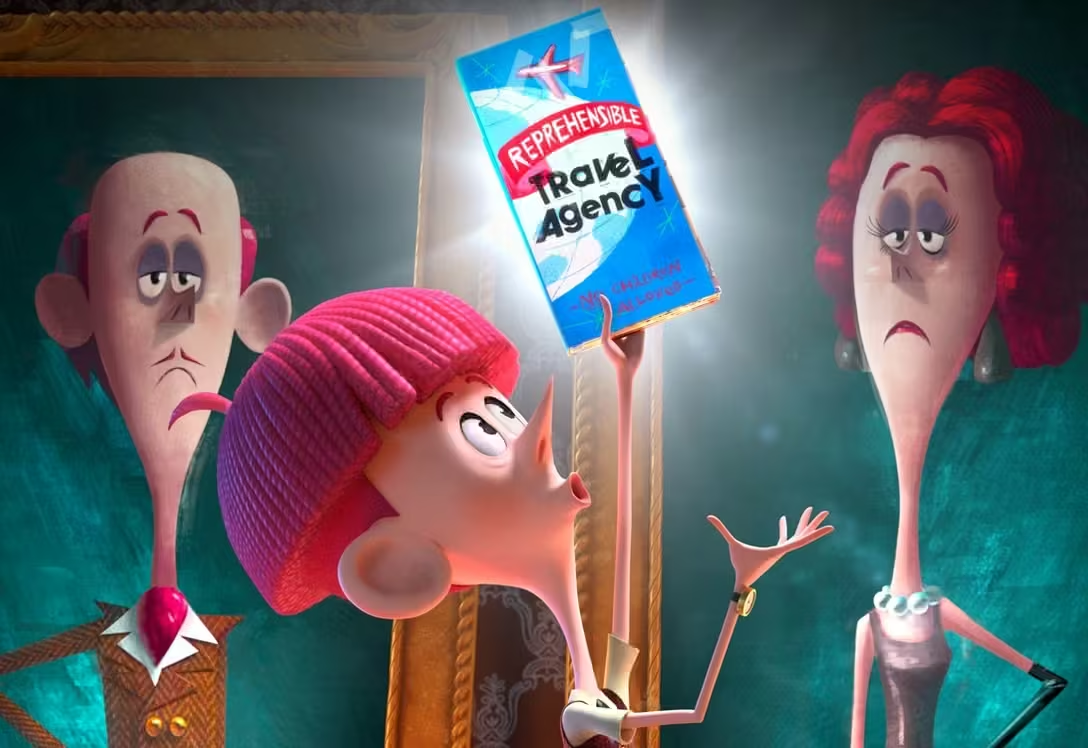
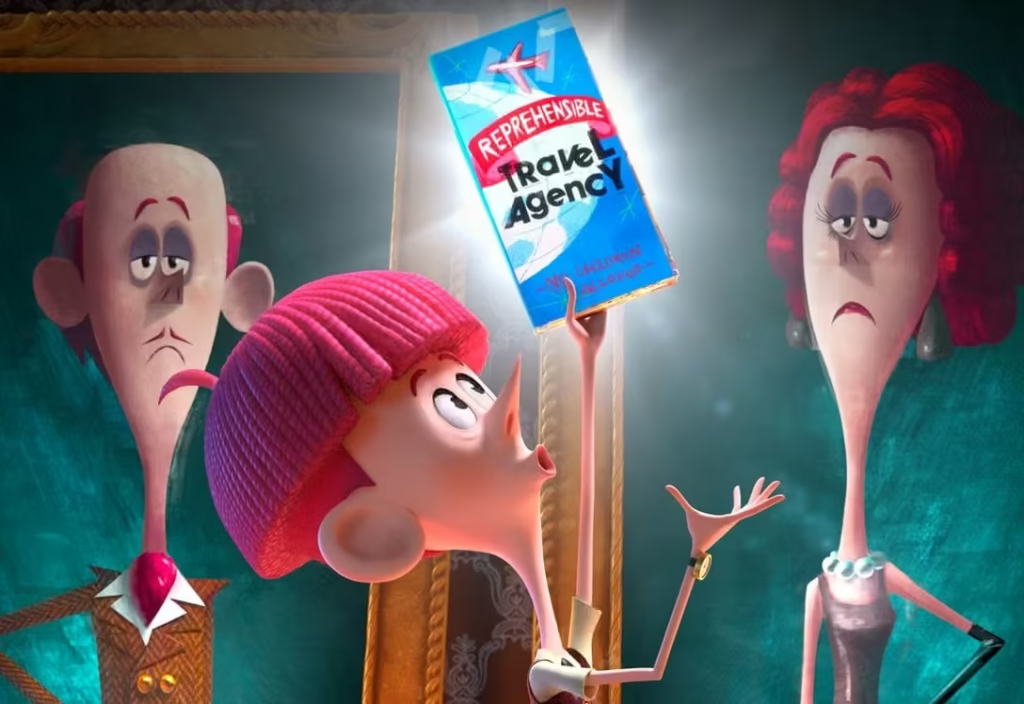
The Willoughby parents (voiced by Martin Short and Jane Krakowski) are the most magnificently terrible parents in recent animated cinema narcissistic, oblivious, and so besotted with each other that their four children barely register as furniture. So the Willoughby children bookish Tim, dreamy Jane, and the inseparable twins Barnaby A and Barnaby B hatch a plan: ship their parents off on the most dangerous vacation imaginable and figure out how to live without them. What arrives instead is Nanny (Maya Rudolph, perfectly chaotic), and later a candy tycoon who turns out to need as much rescuing as the children do.
Director Kris Pearn makes The Willoughbys in a visual mode that deliberately recalls old children’s book illustration everything slightly off-kilter, every color slightly too much, the world rendered with the exaggerated unreality of a Tim Burton project filtered through Lemony Snicket’s mordant sensibility. The Netflix Original wobbles tonally in a few spots, but its central emotional logic that neglect is a form of abandonment, and that genuine family is something you build rather than something given — arrives with surprising clarity.
The film is darker than many parents might expect from its pastel palette, and this is completely intentional. Like Matilda before it, The Willoughbys treats children with the respect of acknowledging that some family situations are genuinely, structurally bad — and that survival sometimes requires imagination. Ricky Gervais narrates, dry and withering, as a highly opinionated cat who is not particularly invested in anyone’s wellbeing. He is perfect.
12. Guillermo del Toro’s Pinocchio (2022)
- Genre: Animated Dark Fantasy/Musical
- Rating: PG IMDB Rating: 7.6/10
- Rotten Tomatoes Tomatometer: 97%
- Rotten Tomatoes Audience Score: 77%
- Common Sense Media Age Recommendation: 9+ years
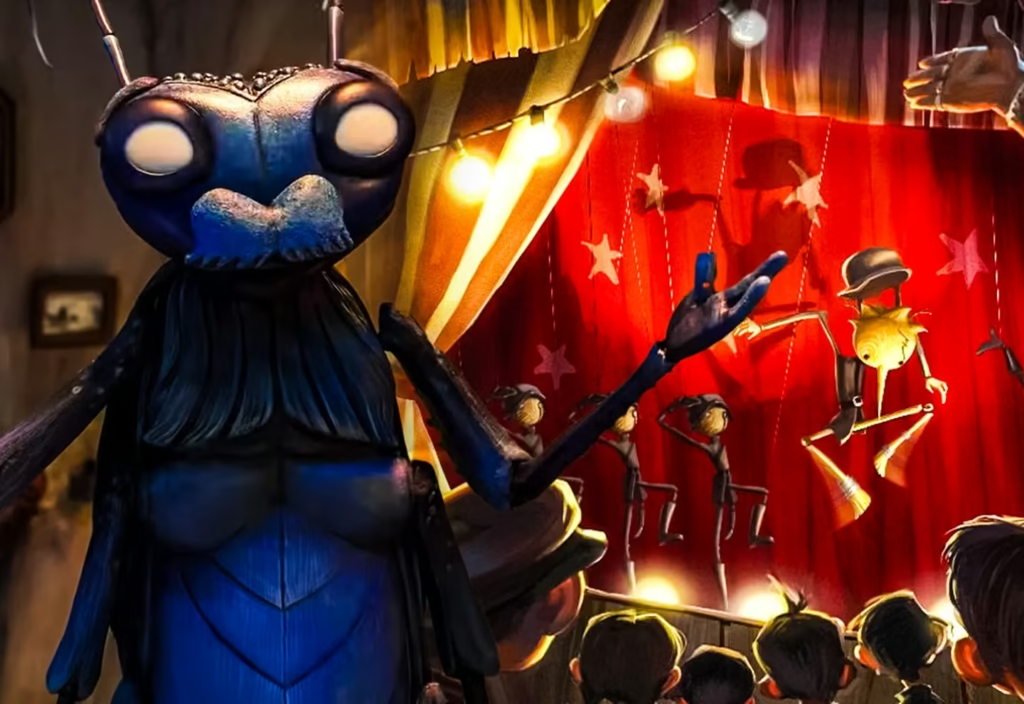
The version of Pinocchio that Guillermo del Toro has carried in his imagination for decades and finally brought to life through stop-motion animation for Netflix, co-directing with Mark Gustafson is not the Disney version you grew up with. This Geppetto is a grieving man in Mussolini’s Italy, who carves his son’s replacement out of pure anguish, who cannot look at the wooden boy without seeing the real one he lost. This Pinocchio is not a naive innocent longing to be a real boy he is something wilder, stranger, more dangerous: a creature who doesn’t understand death because he keeps coming back from it. The cricket Sebastian J. Cricket (Ewan McGregor) doesn’t guide him so much as desperately try to keep up.
Del Toro has always been a filmmaker of gothic tenderness the director who gave us Pan’s Labyrinth and The Shape of Water understands that the most powerful fairy tales live at the intersection of horror and love. Pinocchio is his most personal film yet. Its setting fascist Italy, the late 1930s, the machinery of war beginning to grind gives the story a historical weight that transforms its themes. What does it mean to be a real boy in a country that wants boys to die for a flag? What is the value of an obedient child? Pinocchio, who cannot be controlled, who won’t perform the obedience the regime demands, becomes accidentally radical.
The stop-motion animation the real, physical manipulation of puppet and light, frame by frame carries a handmade warmth that no amount of computer rendering can replicate. Every imperfection is a testament to human labor, and del Toro leans into this intentionally: this is a movie about what it means to be made by a loving hand. The film won the Academy Award for Best Animated Feature, and the award was deserved.
A word of caution: this is a darker, more demanding film than most on this list. Some sequences particularly those involving death, war, and del Toro’s vision of the afterlife — require parental judgment for younger children. But for kids ready for it, there is nothing else quite like it streaming anywhere.
13. Enola Holmes (2020)
- Genre: Mystery/Adventure
- Rating: PG-13 IMDB Rating: 6.6/10
- Rotten Tomatoes Tomatometer: 91%
- Rotten Tomatoes Audience Score: 87%
- Common Sense Media Age Recommendation: 10+ years
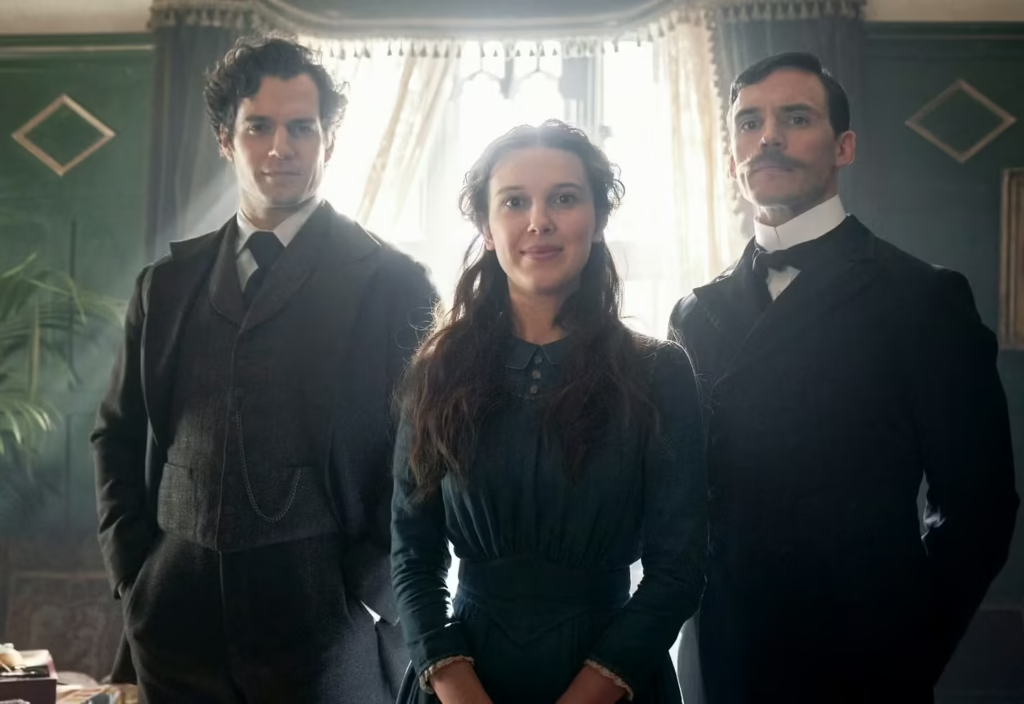
Sherlock Holmes’s younger sister was not supposed to exist. She was invented — in a YA novel series by Nancy Springer as a corrective impulse: what if the world of Victorian detective genius had been denied to women, and one woman refused to accept the denial? Millie Bobby Brown plays Enola with a crackling, fully inhabited energy that immediately reframes the entire Holmes mythology. She breaks the fourth wall constantly, dragging the audience into her headspace with a conspiratorial urgency, and it works because Brown has the rare ability to be in on the joke without ever losing sincerity.
The plot sends Enola into the streets of London in search of her vanished mother (Helena Bonham Carter, wonderfully strange), navigating a world that keeps trying to send her back to finishing school. Her brother Sherlock (Henry Cavill, doing something surprisingly warm and generous with the role) circles the margins of the story, occasionally useful, occasionally patronizing, always slightly outmaneuvered by the sister everyone underestimated.
Director Harry Bradbeer whose background is in television drama (Fleabag, most notably) gives the film an energetic, slightly breathless pace, and he understands that Enola’s story is fundamentally about a girl learning to trust her own competence. The mystery plot itself is entertaining if not precisely rigorous, but the character at the center is the real draw. Enola Holmes is exactly the kind of heroine that young girls — and, frankly, people of any age should have more of: brilliant, fallible, entirely herself, and furious about the world’s limitations in a way that makes her seem capable of changing them.
14. Enola Holmes 2 (2022)
- Genre: Mystery/Adventure
- Rating: PG-13 IMDB Rating: 6.8/10
- Rotten Tomatoes Tomatometer: 79%
- Rotten Tomatoes Audience Score: 81%
- Common Sense Media Age Recommendation: 10+ years
The second Enola Holmes adventure is more confident than the first, partly because Bradbeer and writer Jack Thorne know their protagonist better now, and partly because they’ve anchored their mystery to something real: the Match Girl Strike of 1888, when young women working in matchstick factories were poisoned by their conditions and organized to demand better. Enola is hired by a matchgirl named Bessie to find her missing sister, and the investigation spirals outward into financial conspiracy, political intrigue, and a growing partnership with Sherlock that neither sibling would quite like to admit they enjoy.
What the sequel does more deliberately than its predecessor is root Enola’s personal story in the public world the injustices she encounters are not just plot mechanics, but real historical grievances given human faces. Millie Bobby Brown is sharper here, more comfortable in the role’s demand for both comedy and gravity. The fourth-wall breaks feel more naturally integrated, less like a filmmaking decision and more like a character trait fully inhabited.
Louis Partridge as Tewkesbury returns, and the film develops the romantic tension between him and Enola with a genuine lightness there is nothing forced or cloying about their chemistry. Henry Cavill’s Sherlock finally gets room to breathe, and Cavill rewards this generosity with a performance of genuine warmth beneath the famous hauteur. The film is not as startlingly fresh as the original, but it is more polished and, in places, more emotionally satisfying.
15. The Christmas Chronicles (2018)
- Genre: Holiday Comedy/Adventure
- Rating: PG IMDB Rating: 6.6/10
- Rotten Tomatoes Tomatometer: 68%
- Rotten Tomatoes Audience Score: 74%
- Common Sense Media Age Recommendation: 6+ years
Kurt Russell’s Santa Claus is not the jolly, rosy-cheeked department store version. He’s lean and cool and slightly dangerous-looking, the kind of man who’d ride a motorcycle and quote Springsteen at you if you were foolish enough to test him. This is, frankly, an improvement on most cinematic Santas, and Russell knows it. He plays the role with the sly, self-aware confidence of a man who has played many tough guys in his career and is delighted to have finally found the toughest one.
The plot is thin and cheerfully unconcerned with its own thinness: siblings Kate and Teddy (Darby Camp and Judah Lewis) stow away in Santa’s sleigh on Christmas Eve, chaos ensues, the reindeer scatter, and Christmas itself hangs in the balance. Director Clay Kaytis — whose background includes supervising animation on several Disney features — understands that the plot is a vehicle for Russell’s energy, and he keeps the camera close to it.
This isn’t a film that holds up to significant scrutiny. Its emotional backstory (the siblings grieving their late father) is more asserted than explored, and the sentimentality peaks in places that feel slightly unearned. But as a holiday delivery mechanism — warm, funny, buoyed by a movie star who is clearly having the time of his life — it functions exactly as intended. Put it on after dinner. Enjoy Kurt Russell being magnificent. Lower your expectations for everything else. This formula works.
16. The Adam Project (2022)
- Genre: Sci-Fi Action/Comedy
- Rating: PG-13
- IMDB Rating: 6.7/10
- Rotten Tomatoes Tomatometer: 67%
- Rotten Tomatoes Audience Score: 78%
- Common Sense Media Age Recommendation: 11+ years
Ryan Reynolds plays a time-traveling fighter pilot who crash-lands in 2022 and winds up having to work with his own twelve-year-old self. This is, obviously, a premise designed to make Ryan Reynolds do the thing Ryan Reynolds does which is deliver sardonic quips while being better-looking than he has any right to be and director Shawn Levy (who has now made a trilogy of films with Reynolds, including the far superior Free Guy and Deadpool & Wolverine) is professionally skilled at creating the exact conditions for this to occur.
What makes The Adam Project more than a delivery system for Reynolds’s charm is the relationship between adult Adam and his younger self (Walker Scobell, remarkable in his ability to essentially do a Reynolds impression while also being a real kid). There is genuine emotional intelligence in the way the film uses time travel as a metaphor for regret — specifically, the regrets a man carries about who he was as a child, and what he’d say to that child if he could. The late Mark Ruffalo appears as their father, and Ruffalo does what Ruffalo always does: he brings a searching, rumpled humanity that the film doesn’t quite deserve but gratefully accepts.
The action is clean and fun. The science fiction is, appropriately, not taken seriously. The emotional beats land more often than they don’t. This is not a great film, but it’s a very good rainy-afternoon film, and sometimes that’s exactly what you need.
17. Night at the Museum (2006)
- Genre: Fantasy/Comedy
- Rating: PG IMDB Rating: 6.4/10
- Rotten Tomatoes Tomatometer: 44%
- Rotten Tomatoes Audience Score: 61%
- Common Sense Media Age Recommendation: 7+ years
The critics in 2006 were unkind to Night at the Museum, and you can understand why — the film is broad, its logic is a negotiated settlement between the demands of its premise and the demands of its budget, and Ben Stiller does exactly one thing throughout (which is: panic at things). What the critics perhaps underweighted was how genuinely, electrically fun the central premise is, and how well the film delivers on it.
Larry Daley is a divorced, well-meaning, perpetually failing man who lands a night security job at the Natural History Museum. The first night on the job, everything in the museum comes to life: a living T-Rex skeleton who wants to play fetch, a miniature Roman general (Steve Carell-channeling-Napoleon, played by Owen Wilson with a bemused gentleness), an Egyptian Pharaoh who wants his golden tablet back, and Teddy Roosevelt (Robin Williams, at his most playfully warm) offering wisdom that Larry isn’t ready to receive.
The film is unambiguously a family entertainment product in the most commercial sense of that phrase. But Williams’s Teddy Roosevelt is a reminder of what that actor was capable of in a role that required simple, uncomplicated kindness and Ricky Gervais, as the pompous museum director, is genuinely funny in every scene he’s given. Children who see this film will remember it. That’s not nothing.
18. We Can Be Heroes (2020)
- Genre: Superhero/Action/Comedy
- Rating: PG
- IMDB Rating: 4.8/10
- Rotten Tomatoes Tomatometer: 64%
- Rotten Tomatoes Audience Score: 73%
- Common Sense Media Age Recommendation: 7+ years
Robert Rodriguez the filmmaker who gave children the Spy Kids franchise and made it entirely on his own chaotic terms returns here to that same spirit of benevolent, maximalist, kid-sovereign universe-building. The premise is a direct extension of his earlier Adventures of Sharkboy and Lavagirl: the world’s greatest superheroes have been captured by aliens, and their children a wildly diverse group of kids with equally wildly diverse powers are going to have to save them, despite the condescending conviction of every adult in the room that this is a terrible idea.
The critical consensus on We Can Be Heroes is not generous, and it’s true that Rodriguez works here in a mode that is deliberately, almost defiantly loose — the film has a handmade, seat-of-the-pants energy that can read as sloppiness if you’re not calibrated to his frequency. But watch it with an eight-year-old. The film takes children’s ingenuity seriously, honors their logic, and gives the young actors room to be genuinely funny and strange. Priyanka Chopra Jonas does good work as a government agent who slowly gets out of the children’s way. Pedro Pascal is there for roughly forty-five minutes, wearing a superhero suit and doing whatever Pedro Pascal does to make everything feel slightly more electric.
This is not a film for adults watching alone. With children, it becomes something else.
19. Wish Dragon (2021)
- Genre: Animated Fantasy/Comedy
- Rating: PG
- IMDB Rating: 7.0/10
- Rotten Tomatoes Tomatometer: 75%
- Rotten Tomatoes Audience Score: 83%
- Common Sense Media Age Recommendation: 7+ years
Wish Dragon wants to be Aladdin this is not hidden, exactly but in the hands of director Chris Appelhans, it becomes something with its own particular flavor: a Shanghai-set riff on the genie myth that has genuine affection for its urban setting and genuine insight into the material aspirations of its young protagonist. Din is a college student working multiple dead-end jobs in contemporary Shanghai, desperately trying to close the growing gap between himself and Li Na, his childhood best friend who has become wealthy and famous. When he finds a magic teapot and releases the dragon inside (John Cho, wonderfully deadpan and wise), he gets ten wishes and ten days to use them.
The film’s central argument is the oldest one in the wish-granting genre: that what you think you want is almost never what you actually need. Wish Dragon doesn’t do anything particularly subversive with this framework, but it executes it with real warmth and a visual palette that renders Shanghai’s neon sprawl with a loving specificity. The action sequences are crisp and playful. John Cho’s dragon ten thousand years old, deeply over humanity’s lack of imagination is consistently the funniest and most emotionally resonant character in the room.
It’s not a groundbreaking film. But it’s an honest one, and it ends in a place that feels genuinely earned.
20. Slumberland (2022)
- Genre: Fantasy/Adventure
- Rating: PG
- IMDB Rating: 6.2/10
- Rotten Tomatoes Tomatometer: 54%
- Rotten Tomatoes Audience Score: 82%
- Common Sense Media Age Recommendation: 7+ years
Francis Lawrence (The Hunger Games franchise) operates in a completely different register here: small, quiet, dreamy. Nemo is a young girl who loses her father in a storm and goes to live with her uncle Philip (Chris O’Dowd), a man so aggressively, preposterously awkward that he makes family togetherness feel like an act of bravery. In Slumberland the dream world accessible through a hidden door in the house Nemo finds Flip (Jason Momoa, magnificently committed to chaos), a half-man-half-walrus outlaw figure who knows a secret map to a pearl that grants any wish. Including the wish to see her father again.
The film’s critical reception was divided, and the dissent is not unreasonable Slumberland is uneven, its tonal range occasionally working against its emotional ambitions, and the dream logic can feel arbitrary in ways that dream logic in better fantasy films makes feel necessary. But Momoa’s performance is genuinely surprising. The actor brings a lumbering, bighearted sadness to Flip that cuts through the film’s more indulgent flights of whimsy, and his relationship with the young actress Marlow Barkley (who is excellent) feels real in a way that the film’s spectacle occasionally does not.
The film is about grief, more honestly and directly than many children’s films dare to be. The ending is genuinely moving, and it earns its tears even if the road there has potholes. Worth it.
21. Back to the Outback (2021)
- Genre: Animated Comedy/Adventure
- Rating: PG
- IMDB Rating: 6.4/10
- Rotten Tomatoes Tomatometer: 79%
- Rotten Tomatoes Audience Score: 73%
- Common Sense Media Age Recommendation: 6+ years
Tired of being gawked at by humans who fear them, a group of Australia’s deadliest animals — a taipan snake named Maddie, a thorny devil named Zoe, a funnel-web spider named Frank, and a scorpion named Nigel break out of the Sydney zoo and head for the outback, where they might finally be appreciated. Maddie is the heart of the operation: a beautiful, earnest taipan who is exhausted by the horror she sees in human faces every time they look at her. The idea that you might be feared for what you are and simply long to exist without that fear is, quietly, quite a rich one.
The Netflix Original doesn’t go terribly deep with its premise, and its antagonist a handsome but vapid koala named Pretty Boy who inadvertently tags along is more tiresome than funny in extended doses. But the Australian setting gives the film a visual personality that distinguishes it from the generic, and the voice cast (Isla Fisher, Tim Minchin, Eric Bana, Guy Pearce) brings genuine character to their roles.
For younger children discovering Australia’s remarkable, terrifying wildlife for the first time, Back to the Outback is a genuinely useful introduction: a film that asks, with sincere gentleness, what “dangerous” means and who gets to decide. That’s a better question than most adult films bother to ask.
22. A Babysitter’s Guide to Monster Hunting (2020)
- Genre: Horror Comedy/Fantasy
- Rating: PG
- IMDB Rating: 5.7/10
- Rotten Tomatoes Tomatometer: 68%
- Rotten Tomatoes Audience Score: 69%
- Common Sense Media Age Recommendation: 9+ years
There is a genre beloved by children who are slightly too old for pure fantasy and not quite old enough for actual horror in which the monsters are real but the kids are the ones who handle them. A Babysitter’s Guide to Monster Hunting works this vein with enthusiastic if imprecise hands: Kelly Ferguson is a fourteen-year-old babysitter whose first job goes catastrophically wrong when the Grand Guignol (Tom Felton, cheerfully hamming) kidnaps the child in her care to use in a dream-stealing ceremony. Kelly discovers a secret society of babysitters who do this kind of thing all the time. The monsters are quite good practical-leaning design work gives them a pleasingly old-school eeriness.
The film is not especially well-paced, and it never quite decides whether it wants to be genuinely scary or a parody of scary, a tension it doesn’t resolve so much as alternate between. But for the specific age group it targets nine to twelve, roughly it nails something important: the fantasy of the competent child, the idea that babysitting (an undervalued, female-dominated form of labor) might conceal real stakes. Felton, doing his best post-Draco-Malfoy villain work, clearly had fun. It shows, in the best way.
23. The Paddington (2014)
- Genre: Comedy/Family/Adventure
- Rating: PG
- IMDB Rating: 7.2/10
- Rotten Tomatoes Tomatometer: 97%
- Rotten Tomatoes Audience Score: 88%
- Common Sense Media Age Recommendation: 5+ years
In 2014, director Paul King made a film about a small bear from Peru who comes to London wearing a red hat, hoping for a warm welcome. He made it gently, without condescension, with a visual wit that recalled Wes Anderson and a warmth that recalled nothing so much as the original Michael Bond books themselves that peculiar, very English combination of whimsy and genuine feeling.
Paddington (voiced, incomparably, by Ben Whishaw) is an immigrant story as a children’s film. He arrives with nothing, trusting a city that the city’s own inhabitants seem to have given up trusting. The Brown family Hugh Bonneville’s cautious, risk-managing father; Sally Hawkins’s generous, spirited mother take him in with varying degrees of enthusiasm. Their home, initially resistant and polite, gradually becomes something that accommodates a bear, and changes for the better. Nicole Kidman’s villain is wonderfully theatrical a taxidermist of rare animals who wants Paddington for her museum but she is never the point. The point is Paddington himself: his impossible, undefended goodness, his faith that decency will be met with decency, his slight bewilderment at a world that seems to have forgotten how to practice either.
The film is deeply, beautifully funny the bathroom-flooding sequence remains one of the great physical comedy set pieces of recent British cinema without ever using Paddington as the butt of the joke. He is the hero. He is always the hero. Children watching Paddington learn something that adults often have to be reminded of: that looking for the best in people is not naïveté. It is, in its own way, courage. If this is on Netflix and you have not watched it, please fix that immediately.
24. Jurassic World (2015)
- Genre: Sci-Fi/Action/Adventure
- Rating: PG-13
- IMDB Rating: 6.9/10
- Rotten Tomatoes Tomatometer: 72%
- Rotten Tomatoes Audience Score: 67%
- Common Sense Media Age Recommendation: 12+ years
Colin Trevorrow’s soft reboot of the Spielberg franchise is a more interesting film than its reputation suggests, though not quite as interesting as the reputation it gives itself. Isla Nublar is now a fully operational theme park dinosaurs living alongside tourists, corporate sponsors plastered across the exhibits, a blockbuster-ride logic applied to creatures whose entire existence should inspire awe rather than throughput metrics. When the park’s geneticists engineer a new dinosaur bigger, scarier, smarter, designed specifically to goose flagging attendance numbers and the Indominus Rex inevitably breaks free, director Trevorrow can’t entirely resist the film’s own thematic implications: this is a movie about what happens when entertainment demands override wonder.
Chris Pratt brings his particular brand of casual, self-effacing charm to Owen Grady, a raptor trainer whose relationship with his animals is the film’s most quietly interesting thread a suggestion that coexistence is possible, that communication can cross enormous evolutionary gaps, if both parties are paying attention. The child protagonists (Nick Robinson and Ty Simpkins) give the film its emotional stakes, and Trevorrow handles their scenes with more delicacy than the action sequences frankly deserve.
This is a PG-13 film with real teeth several sequences are genuinely frightening, and the Indominus Rex doesn’t play as a cartoon monster but as something legitimately terrifying. For the right age group, this adds genuine stakes. For younger children, use parental judgment liberally.
25. Chasing Summer (2026)
- Genre: Romantic Comedy-Drama
- Rating: R
- IMDB Rating: N/A (Sundance premiere, January 2026)
- Rotten Tomatoes Tomatometer: N/A (festival circuit)
- Rotten Tomatoes Audience Score: N/A
- Common Sense Media Age Recommendation: 15+ years
A note to parents and younger readers: “Chasing Summer” is not a children’s film. It is included here because it premiered in early 2026 and is expected to arrive on streaming platforms this year and because it is, without question, one of the most interesting films of 2026 for older teens and adults. Use parental discretion for viewers under 16.
Now. About the movie.
Josephine Decker is the kind of filmmaker who makes you feel the texture of a scene before you understand it the director of Madeline’s Madeline (2018) and Shirley (2020) built her reputation on films that refuse the consolations of conventional grammar, that use camera and cut to express psychological states that dialogue can’t reach. So when you hear that her new film was written by and stars Iliza Shlesinger a stand-up comedian whose persona is aggressively, hilariously, normiely relatable you might brace for collision.
What you get instead is something more interesting: a productive friction, a negotiation between two distinct artistic intelligences that somehow produces a film greater than either would have built alone.
Jamie has had a bad year. Her long-term boyfriend left her for someone younger. Her job as a crisis aid worker has been upended. She has no plan, no forward momentum, and temporarily nowhere to go but home. So she goes back to suburban Texas, back to her parents (Megan Mullally, in a performance of such cheerful, bewildering oddness that she functions like a weather system), back to her bossy sister’s crumbling roller rink, and back to the complicated social archaeology of a small town that preserved her teenage self in amber.
Shlesinger’s script is sharp and self-aware in the way that good autobiographical comedy usually is she grew up in Dallas, she knows the cadence of Texas suburbia, and she understands the particular comedy of an adult woman who is demonstrably more capable than her high school reputation allowed for, and yet cannot stop being fourteen around the people who knew her then. The material could be safe, formulaic, a warm-bath romantic comedy about rediscovering what matters. Decker won’t let it be.
She makes her camera wander and circle. She cuts against continuity with abandon. She finds the emotional register of a scene through visual means a tight close-up on Shlesinger’s face that catches something undefended, an edit that rhymes two moments across time without explanation. What could be a Hallmark movie gains an unsettling, alive quality, as though the film itself is feeling its way through unfamiliar territory, just like its protagonist.
Garrett Wareing plays Colby, the younger co-worker at the roller rink who becomes Jamie’s unlikely love interest. He’s the film’s sweetest surprise: an actor who brings genuine vulnerability to a role that a lesser film would have made simply decorative. Lola Tung so good in The Summer I Turned Pretty appears as Jamie’s young co-worker, and her scenes with Shlesinger crackle with a generational warmth, a warmth between two women who recognize something in each other across the age gap.
Tom Welling, cast as the specter of Jamie’s high school heartbreak, is deployed with a knowing cleverness: he is early-2000s hunk mythology made flesh, the ghost of a time when things seemed simpler and romantic mistakes seemed reversible. He barely needs to act he needs only to stand there, and his presence says everything the script requires.
Decker brings the same commitment to physicality here that distinguished Shirley the way she photographed Elisabeth Moss’s body, its hungers and resistances and provocations, appears again in how she frames Shlesinger’s performance. The sex scenes in Chasing Summer are rare in mainstream comedy: they are actually erotic, actually attentive to what bodies feel like when they want something, and they are presented without irony or apology.
The film is not without its roughness. Shlesinger’s script occasionally bogs in the intricate lore of Jamie’s high school past, weaving relationships and betrayals whose emotional stakes don’t fully land for an audience without context. Some transitions feel abrupt in ways that may be intentional and may just be abrupt. The comic-to-serious gear shifts don’t always execute cleanly.
But the climax a rowdy, physically committed comedic set piece earns genuine release. Decker, to her enormous credit, lets it play like the big studio comedy it always half-wanted to be, gives the laugh room to breathe, and lands the moment. It’s the work of a director who can do anything, working with a writer who knows exactly who she is.
Decker said it best in an interview before the Sundance premiere: that she saw in Shlesinger’s script a truth she recognized from her own life that middle age and adolescence have more in common than either would like to admit. Both are periods of radical identity instability. Both involve looking at the person you used to be and trying to figure out what to keep. Chasing Summer is, underneath all its comedy and sun-soaked Texas nostalgia, about exactly that: the work of deciding what version of yourself to carry forward, and what to finally, mercifully leave behind.
It is one of 2026’s finest films. Keep the kids away from it. Then watch it yourself, and see if it doesn’t say something true about the summer you once were.
Streaming availability on Netflix varies by region. All ratings current as of March 2026.
