Last Updated on March 20, 2026 by Monica Castillo
Director Damian McCarthy, who made the much-hyped horror movie *Oddity* comes back with another film that explores the same themes but seems new. The elements of folk-horror and the idea that the real-world violence can give birth to the supernatural retaliation are used in Hokum, yet the movie stands firmly on its legs. The initial collaboration of McCarthy with Neon is largely located in one place and is based on the references to the films such as The Shining and The Innocents, as well as confirming McCarthy as one of the strongest and most interesting voices of the genre nowadays. When the fact that Caveat and Oddity were the signs of a brilliant future of this film director, Hokum keeps his word.
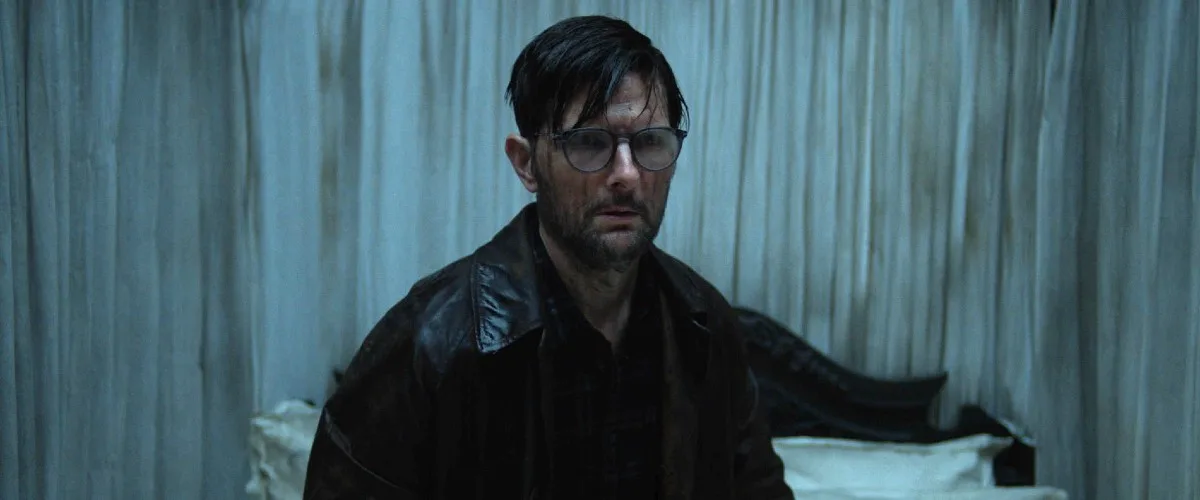
Adam Scott plays his finest role so far as the troubled horror writer Ohm Bauman who is a character similar to those who Stephen King has brought to life as dark heroes. Bauman goes to a secluded Irish hotel where his parents spent their honeymoon in hopes of burying his mother in a redwood tree that was taken in an ancient picture of his mother. His mother passed away in a tragic accident many years ago and this situation must be faced by Ohm, and the lack of control over his father has transformed the family environment to make it miserable. The most emotional scene in the movie by McCarthy is when Ohm carefully lays the ashes of his mother in the ground beneath the tree and sprinkles the ashes of his father in the same place as something that he does not want to do.
Highly Recommended: Psycho Killer (2026) Parents Guide
The hotel in Ireland is occupied by unorthodox characters, one of them being Fiona (Florence Ordesh) who plays with Ohm before disappearing after a Halloween celebration. After a hint, which will not give anything away, Ohm decides to locate her, although the majority of the men on the scene of the action, such as the manager, appear to be hopeless. When Ohm suggests that they search the locked honeymoon suite, everybody insists that she could not be there since that is where the witch allegedly lives.
The apparently simple storey is that of an angry, alcoholic author who basically travels to Hell in order to discover the truth of a lost woman. Such simplicity does not take away the great mastership of McCarthy. Colm Hogan, who cut his teeth on Oddity, employs framing, negative space and shadows in his cinematography without imposing his inspirations on them, which is referential to the influences behind the movie but by no means copies them. This visual language is somewhat hypnotic; camera tends to remain in the position of the point of view of Ohm and the audience wonders about what is hiding in the darkness as much as Ohm does. The movie provides some of the most frightening scenes of 2013, but it does not overdo it as the movie realises that thrilling fear can be more thrilling than sudden jump scares. It is not a slow burn, but the best thing about Hokum is the way it swings back and forth between shocking images and that underlying feeling of dread.
One of the secrets of such a rhythm is the cooperation of McCarthy and the editor Brian Philip Davis, who manipulates the rhythm of the pacing of the film Hokum. Horror editing is more than usually complimented as excessive flashiness, yet in this movie, prudent editing slides through creepy rooms and hallways. Davis understands when to plunge us into the thoughts of Ohm and when to take off the stress. The movie does not linger at one set, it passes the scenes like a haunted dollhouse built well, so the process of its creation seems vital and meaningful.
Highly Recommended: Dolly Parents Guide
Scott is arguably performing his most powerful acting role. He succeeds in being quiet, making Ohm experience the growing fear, utter remorse, and annoying character without the necessity of being charismatic. Ohm is an ugly man who does not appreciate people who want career guidance. McCarthy and Scott do not want to shape Ohm into a traditional, likeable hero and this brings some realistic elements to the storey as the audience wonders whether he actually deserves to be swept into the supernatural. The inner conflict of Ohm is very authentic and relatable.
The horror filmmakers that were born during the new generation, including Oz Perkins and Zach Cregger, are also continuing to amass their fan bases. New voices come and go in order to take the centre stage in every couple of years and then reappear to go back into obscurity when the innovation goes dead. These predictions may be either correct or incorrect, but the work of McCarthy is one of the unique ones, featuring the sense of classic genre and modernity at the same time. He does not just copy the common tropes, but he creates something terrifyingly new, basing it on solid groundwork, combining folk history with extensive character work, the space atmosphere, and the biblical justice.
McCarthy has tapped into this with the title of his most recent effort which obviously challenges anyone who considers ghost storeys a mere piece of folklore told by the fire in Ireland. Irish witch storeys were told since time immemorial not just to scare but to get to the root of the truth. The fact that the plight of its protagonist is taken seriously without winking at the audience by the author makes Hokum better than its peers even as the impossible happens. It is a dangerous decision not to question folklore.
Hokum (2026) Parent Guide
Violence & Intensity. There are disturbing images tied to grief, death, and implied supernatural retaliation, including unsettling sequences in dark interiors and moments that suggest bodily harm without always showing it outright. The emotional intensity especially surrounding parental death and guilt is as impactful as the horror itself. Expect sustained tension, frightening imagery, and a few sequences that may linger with younger viewers.
Language and profanity: The dialogue reflects the protagonist’s unstable mental state, with frequent strong language throughout. Profanity is used in frustration, anger, and despair rather than for humor. There are no notable slurs emphasized in the film, but the tone is consistently harsh and emotionally raw.
Sexual Content / Nudity: The film contains minimal to no explicit sexual content. Any references are brief and non-graphic, with no significant nudity. The focus remains firmly on psychological horror and character trauma rather than physical relationships.
Drugs, Alcohol & Smoking: The central figure is portrayed as a struggling alcoholic, and drinking is shown repeatedly as part of his coping mechanism. This is not glamorized it is depicted as destructive and tied to his emotional decline. There may be brief background smoking, but substance use is primarily centered on alcohol.
Age Recommendations: Hokum is best suited for ages 17+. Even older teens may find the film’s grief-driven narrative and psychological horror deeply unsettling.
Highly Recommended: Slanted (2025) Parents Guide
Top of FormBottom of Form
This is a review of SXSW Film Festival. It opens on May 1, 2026.
