Last Updated on March 18, 2026 by Monica Castillo
At first glance, the manic, self-aware humor of The Lonely Island might seem like an unlikely match for horror, yet there’s a strange, compelling logic to it. Horror especially the splatter variety shares a rhythm with comedy. Timing is everything. The right pause, the precise beat between a bone-crunching moment and a ridiculous over-the-top reaction keeps the audience from recoiling in disgust. We don’t want to linger on the mechanics of real dismemberment; we want the thrill, the shock, the gleeful acknowledgment that the filmmakers are winking at us from behind the gore. It’s no accident that some of the most celebrated horror directors of their generation Zach Cregger, Jordan Peele come from sketch comedy backgrounds. Even in the work of Sam Raimi or Peter Jackson, you can see the humor threaded through the terror. So when Jorma Taccone, co-director of Popstar: Never Stop Never Stopping, announced he was taking on a remake of Tommy Wirkola’s gruesome The Trip, now retitled Over Your Dead Body, it felt almost inevitable.
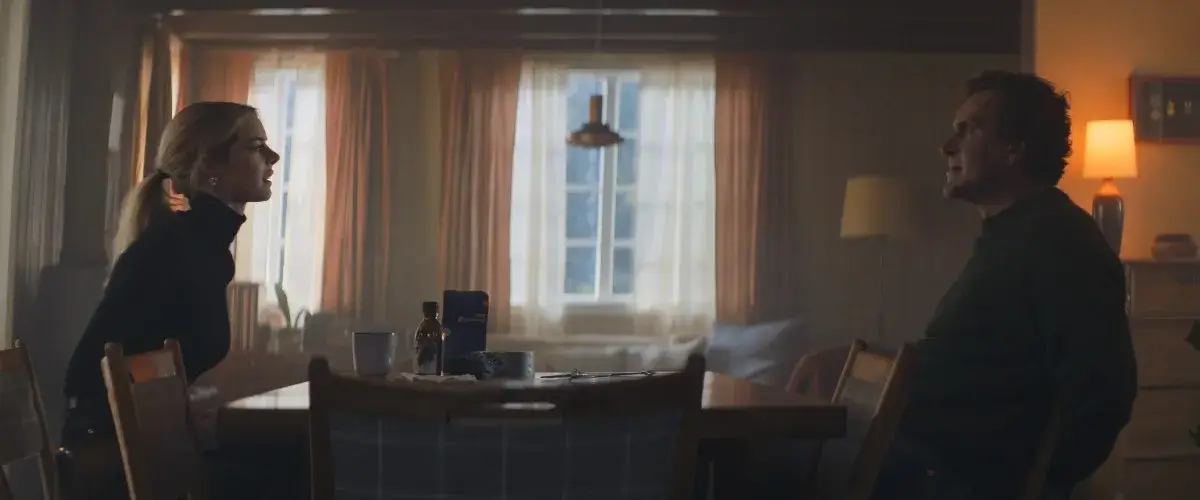
The film opens on Dan, played with his usual mix of hapless charm and inflated self-importance by Jason Segel, a downtrodden director stuck making pop-up ads. He’s plotting the murder of his wife, Lisa (Samara Weaving), during a weekend getaway to a family home in upstate New York. Dan chatters nervously about how Lisa intends to hike alone a nod to every true-crime tale you’ve ever cringed through on Dateline NBC. He’s armed with a trunk full of tape and assorted tools for binding her. You know immediately this isn’t going to end well. But Lisa isn’t the type to be walked over. Just as Dan moves in with chloroform, she pivots and zaps him with a taser. She has a weekend plan of her own, and it’s just as lethal.
Highly Recommended: The Bride! (2026) Parents Guide
The premise is deliciously simple: two people who’ve drifted out of love want each other dead. Dan caught Lisa cheating after years of a miserable marriage, and Lisa despises his pedantic, controlling nature. (Let’s face it he kind of sucks.) There’s also the small matter of life insurance. These opening sequences, where Segel and Weaving trade sharp, biting dialogue that lands like blows as much as it does laughs, are electric. You can feel the chemistry of two performers at their peak, spinning insults with precision and relish. It’s a dark, witty prelude that makes you believe in both their hatred and the narrative tension between them.
Then the movie pivots, quite literally, from a domestic war into a survival story. Two escaped convicts Timothy Olyphant and Keith Jardine and the guard who facilitated their breakout, Juliette Lewis, crash the weekend, and suddenly Dan and Lisa aren’t just trying to kill each other; they’re trying not to die. It’s the kind of twist that should ratchet tension and force them into an uneasy alliance, but the shift lands unevenly. You can feel the potential energy of the scenario trapped in a house, hunted by merciless killers but the film rarely lets us inhabit that fear. Segel’s timing is still impeccable, Weaving moves with the lethal precision of a seasoned action star, yet much of their peril comes down to dumb luck rather than strategy. The chemistry that sparked in the opening act doesn’t fire here; their interactions feel perfunctory when the stakes should be intimate and life-or-death. It’s a curious tension: you admire the actors, you appreciate the staging, but emotionally, the sequence falls flat.
Meanwhile, Olyphant steals nearly every scene he touches. He hasn’t been this unapologetically sinister in years, and he makes it look effortless. A tilted head, a fleeting smirk he inhabits villainy with a sly intelligence that makes the other two in his trio, Lewis and Jardine, feel almost incidental. They do solid work, but the magnetism of Olyphant’s menace keeps pulling our attention away.
Taccone himself shows flashes of brilliance, particularly in staging gore. Bodies are sliced, crushed, and scattered with gleeful abandon, and the film leans into its lineage as a remake of Wirkola’s Dead Snow-adjacent original. Those who delight in inventive make-up effects and meticulously blocked fight sequences will find a lot to admire here. Yet Taccone struggles when the tonal balance tips too far, most notably in an extended sexual assault sequence that overstays its welcome and reduces attempted rape to a punchline. Here, timing the heartbeat of horror-comedy fails entirely, and the film only intermittently recovers its stride thereafter, culminating in an epilogue that leaves a distinctly sour aftertaste.
Highly Recommended:Project Hail Mary (2026) Parents Guide
In the end, Over Your Dead Body is an uneven experience. Its gore is inventive, its cast capable, but its emotional core feels thin. Perhaps it would have been wiser to keep one half of the couple firmly on the antagonist side, or to give Dan and Lisa more moments to make us care about their doomed or potentially redeemable relationship. As it stands, there’s little incentive not to root for all of them to meet impressively staged, grisly ends. The film dazzles, it shocks, it occasionally charms but it never quite convinces, leaving us aware of the gap between spectacle and human stakes.
Over Your Dead Body (2026) Parents Guide
Violence & Intensity: This film is unapologetically violent. From the opening act, bodies are crushed, sliced, and dismembered with gleeful abandon. There’s a relentless stream of blood, graphic fight sequences, and inventive gore staged for maximum shock. While some scenes lean into dark comedy, the horror moments are real enough to unsettle.
Language: Characters hurl insults, curse freely, and occasionally use slurs. The tone is relentlessly adult, emphasizing anger, frustration, and desperation. The verbal exchanges hit as hard as the physical violence.
Sexual Content / Nudity: An extended sexual assault sequence is played partly for shock, partly for grim comedic effect, and it lingers longer than it should, leaving an uncomfortable impression. There are also references to infidelity and some suggestive dialogue, highlighting the bitterness and dysfunction of the central couple. Nudity is limited, mostly implied, but the emotional weight and tension of these scenes are hard to ignore
Drugs, Alcohol & Smoking:
Drug use is minimal and not central to the story. Alcohol appears in social or celebratory contexts, and smoking is rare. These elements are largely background details compared with the film’s focus on violence and survival.
Age Recommendations: With extreme gore, graphic violence, sexual assault, pervasive language, and mature themes of marital dysfunction and murder, this is very much an adult film. Parents should be cautious: even older teens may find some sequences deeply disturbing. The R rating is fully warranted; this is not casual teen viewing.
This review is based on the premiere at the SXSW Film Festival. Over Your Dead Body opens April 24, 2026.
