Last Updated on March 11, 2026 by Monica Castillo
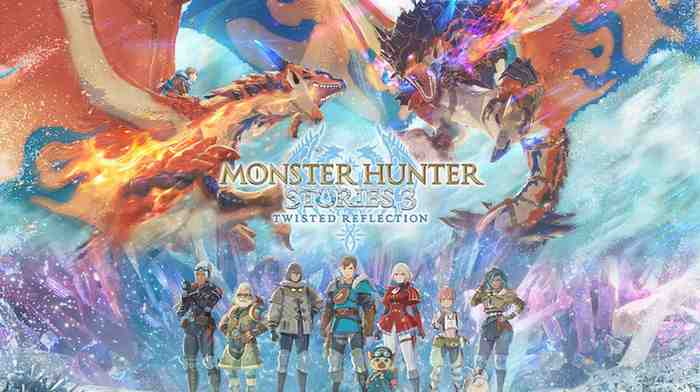
The first thing that strikes you about Monster Hunter Stories 3: Twisted Reflection is that the series has grown up a little. Not in a way that abandons the bright colors or playful spirit that defined the earlier games, but in the way the story occasionally leans into heavier emotions and thornier conflicts. The stakes feel higher, the world a touch harsher. And yet, somehow, the heart of the series the humor, the curiosity, the joy of raising strange creatures remains completely intact. It’s an evolution rather than a reinvention, and the balance works so well that this may end up being the strongest entry the spin-off has produced so far.
That’s saying something if you’ve followed the series from the beginning. The original Monster Hunter Stories introduced the charming idea of turning the traditionally hunt-focused Monster Hunter universe into something closer to a monster-raising RPG. Then Monster Hunter Stories 2: Wings of Ruin came along and polished that formula into something much richer. Going into Twisted Reflection, the hope was simply that it would keep that upward trajectory going. What’s surprising is how confidently it pushes the series further adding new systems, smoothing over old frustrations, and even sneaking in a few affectionate callbacks longtime players will recognize.
Recommended: Pokémon Pokopia (Video Game 2026) Parents Guide
The basic gameplay loop is refreshingly easy to grasp. You play as a Ranger traveling through open regions alongside a small crew, exploring environments, nurturing habitats, and perhaps most importantly collecting eggs that hatch into Monsties. These creatures aren’t just companions for battle; they’re part of a larger ecological system you’re helping shape. You can send them on excursions to gather resources or earn experience, and as your habitats develop, new and stronger Monsties begin to appear, sometimes even with unusual mutations.
Each region is dotted with Monster Dens of different rarities, and there’s almost always something to gather or investigate along the way. Traditional side quests pop up regularly, but the game also introduces Side Stories small narrative detours that pair you with a member of your Ranger crew. They usually involve a short mission followed by a battle, and they serve as little character spotlights. By the end you walk away with useful gear or upgrades, but more importantly, you’ve spent time understanding who these people are.
That steady stream of optional activities gives the game a comfortable rhythm. If the main storyline starts to feel heavy, you can step away for a while wander through an unexplored zone, experiment with Monstie mutations, or dive into a Side Story. None of it feels like filler. Everything you do strengthens your team in some way, which means even a casual detour can make later battles noticeably easier.
Combat itself will feel familiar to returning players. The turn-based system still revolves around a rock-paper-scissors dynamic between attack types, a mechanic that becomes second nature once you’ve spent a few hours with it. Battles are also about positioning and timing staggering monsters, breaking their parts, and managing the occasional appearance of feral creatures that provide an extra challenge during the story.
Preparation matters. Different weapons bring different advantages, and choosing the right Monstie for a fight can mean the difference between victory and a frustrating defeat. The materials you carve from monsters allow you to forge new gear or upgrade existing equipment, creating a layer of customization that’s surprisingly deep for a monster-taming RPG. Playing it, you can’t help but wonder how much a franchise like Pokémon might benefit from borrowing a few of these ideas.
There’s also a deeper system simmering beneath the surface. Monstie genetics play a big role, with mutations and the Rite of Channeling allowing players to tweak abilities and build more specialized creatures. If you enjoy tinkering with builds, you could easily spend hours experimenting with gene combinations and trying to produce the perfect companion.
But what’s nice is that the game never demands that level of obsession. By the halfway point you’ll need a basic understanding of these mechanics, but you don’t need to memorize every possible gene combination just to progress. The difficulty curve lands in a comfortable middle ground—challenging enough to stay engaging without becoming punishing.
The characters add another layer of warmth to the adventure. Your Ranger companions are a lively bunch, each bringing a distinct personality and combat style to the party. It’s fun to rotate them in and out of your lineup just to see how different combinations play out.
Even more refreshing is the protagonist. Instead of a silent placeholder whose only purpose is gaining experience points, this character actually feels like someone living in the world. They react to events, express doubts, and show flashes of hope or frustration. It gives the narrative a human anchor that helps the larger story resonate.
And that story goes bigger than the series has attempted before. The emotional core sometimes recalls the bond between humans and dragons from How to Train Your Dragon, but layered on top of that are political rivalries and betrayals that wouldn’t feel out of place in Game of Thrones. Add a dash of kingdom-level strategy reminiscent of Fire Emblem, and you start to see the tone the developers are aiming for.
It doesn’t always move at a perfect pace. There are stretches where characters talk a bit longer than necessary, and you might find yourself wishing a cutscene would wrap up sooner. Still, those moments are easier to forgive when the world around them looks this good. The environments are vibrant and inviting, and even when the story pauses, you’re rarely eager to leave the scenery behind.
Most of the time, though, you’re not watching the world you’re exploring it. And that’s where the game truly shines. From early on you’re already riding a Rathalos through the sky, swooping across landscapes, climbing structures, and diving into monster dens. There’s very little waiting around for the good stuff; the adventure opens up quickly and stays that way.
Recommended: Reigns: The Witcher Guide
Each zone has its own personality. Some are sprawling and easy to traverse, others are a bit trickier to navigate, but all of them leave a distinct impression. Veteran players will notice a few subtle callbacks to earlier games scattered throughout the world small nods that feel like affectionate winks rather than forced nostalgia. At the same time, newcomers can jump into this story without feeling lost.
What’s remarkable is how difficult it is to identify a real downside. Nearly every system feels refined, and most of the lingering complaints from earlier games simplicity in the first entry, pacing issues in the second have been addressed here.
For me, the clearest sign that Monster Hunter Stories 3: Twisted Reflection works came during my first weekend with it. I sat down intending to play for a few hours and suddenly realized thirty hours had disappeared. Not in a blur of grinding or obligation, but in that pleasant, almost childlike way time disappears when you’re completely absorbed in a game.
That’s the mark of a great RPG. It gives you a world you want to keep returning to, systems that reward curiosity, and just enough mystery to make you wonder what might be waiting over the next hill.
By the end, it’s hard not to feel that this series has quietly become one of the most compelling voices in the monster-taming genre. Between the refined mechanics, the stronger storytelling, and the sheer sense of discovery running through the experience, Twisted Reflection feels like the moment the Monster Hunter Stories spin-off fully comes into its own.
I expected a good sequel. What I didn’t expect was to walk away thinking the series might have just found its definitive chapter.
Monster Hunter Stories 3: Twisted Reflection Parent Guide
Violence & Intensity: Combat is central to the game, but it’s entirely stylized and turn-based. Battles involve weapons, magic, and monster attacks, with creatures being “staggered” or “knocked out,” and sometimes parts of monsters can be broken for rewards. There’s no realistic gore or blood; any injuries are cartoonish or magical in nature. While fights can become tense and bosses are challenging, the intensity remains suitable for younger teens, though younger children might find certain battles slightly stressful.
Language and Profanity: The dialogue is entirely clean. There’s no profanity, slurs, or sexualized language. Characters express frustration, excitement, or humor, but all in ways that are family-friendly. The tone remains adventurous and occasionally dramatic, but it never crosses into adult content in dialogue.
Sexual Content / Nudity: There is no sexual content or nudity in the game. Character designs are modest and stylized, and any flirtation or relationship hints are implied in innocent, story-appropriate ways.
Drugs, Alcohol & Smoking: There are no depictions of drug use, alcohol consumption, or smoking. The world focuses on exploration, combat, and raising creatures, keeping substance themes entirely absent.
Age Recommendations: Given the stylized combat, occasional tension in boss battles, and mild fantasy peril, the game is appropriate for pre-teens and older. Official recommendations suggest ages 10 and up. Younger children may enjoy exploring and raising Monsties but could find certain fights or story moments challenging.
