Last Updated on March 10, 2026 by Monica Castillo
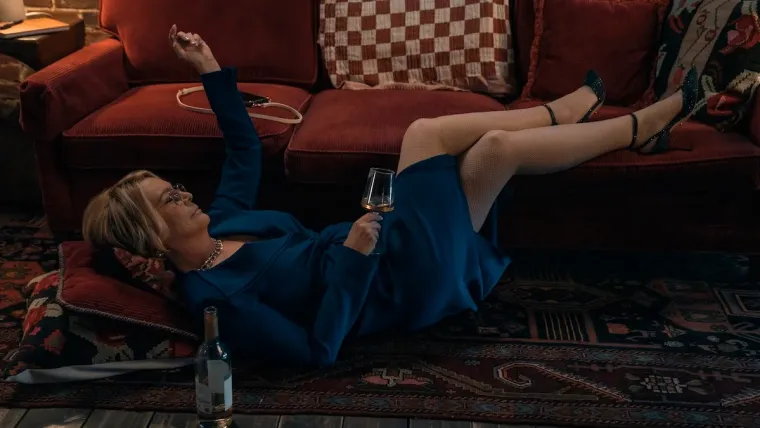
The first thing I noticed about Scarpetta is something I almost never notice in a Nicole Kidman television project: she looks like she belongs there.
That might sound strange. Nicole Kidman has been everywhere on TV for the past decade, drifting through prestige dramas like a tall, elegant visitor who wandered into the wrong room. I’ve often had the feeling she’d been airlifted in from somewhere else another continent, another medium, maybe another temperature entirely. Everyone around her sweats and argues and spills wine, while she stands there composed, glowing faintly like a sculpture someone forgot to dust.
On the big screen, that distance works. It even helps. In something like Big Little Lies, though,
I kept wondering how her character ended up in that messy little circle of school-run gossip. And in The Undoing, the central mystery required her to play someone baffled by the world around her, which is hard to buy when Kidman projects the kind of intelligence that seems permanently switched on.
But here, finally, she’s playing a character who’s supposed to stand a little apart from everyone else.
Dr. Kay Scarpetta a figure borrowed from the long-running novels by Patricia Cornwell walks through rooms with the calm focus of someone who spends her days examining the dead. She’s a forensic pathologist, the former chief medical examiner of Virginia, and when the series begins she has just returned to the job she left decades ago. Her husband Benton, played with reassuring steadiness by Simon Baker, works as an FBI profiler. Their home base is a stately old family mansion that seems to carry its own weather.
Kidman slips into Kay the way someone slips on protective gear before entering a contaminated space: deliberately, carefully, no wasted motion. Cigarette in hand, eyes locked on the details of a murder that reminds her of a case from long ago, she moves through the show with that familiar Kidman stillness except this time it makes sense.
The house itself becomes a small ecosystem of clashing personalities. Kay shares the place with her sister Dorothy, played by Jamie Lee Curtis, who arrives like a thunderclap. Dorothy talks loudly, moves quickly, and carries the emotional temperature of a person who has lived three different lives before lunch. Her husband Pete Marino a retired cop played by Bobby Cannavale trails behind her with the wary patience of someone who’s learned not to stand too close to the blast radius.
Their daughter Lucy, portrayed by Ariana DeBose, grew up under Kay’s wing and now works as a tech prodigy. The arrangement sounds crowded on paper, but on screen it settles into something convincing. The wallpapered rooms feel lived-in. The relationships feel old.
Curtis deserves a lot of credit for that. She doesn’t seem remotely interested in letting Kidman glide through scenes untouched. Instead she pokes at her, interrupts her, talks over her sometimes with the chaotic energy she brought to the mother from The Bear, except turned up another notch. At first Dorothy feels like a hurricane stuck indoors. Gradually the winds slow enough for us to see the person underneath.
Highly recommended: War Machine (2026) Parents Guide
There’s a scene an odd one, maybe the strangest in the show that reveals more about her than pages of backstory could. Lucy communicates with the digital recreation of her late wife Janet, an AI simulation that speaks through a screen. It sounds ridiculous when you describe it. Yet the conversations between Lucy and this electronic ghost land with unexpected weight. DeBose plays Lucy with a mixture of hope and quiet dread, like someone who knows she’s stepping onto emotional thin ice but can’t resist taking another step.
Then Dorothy tries talking to the AI herself.
You brace for disaster. Instead you get something unexpectedly gentle. Janet praises the children’s books Dorothy once wrote books her own daughter never bothered to read. Curtis lets the compliment hit her like a small miracle. For a moment, Dorothy stops performing. You see the hunger underneath all that noise.
Flashbacks fill in the rest of the story, and they hinge on a clever bit of casting. Rosy McEwen plays the younger Kay, back when she first stepped into the medical examiner’s office decades earlier. McEwen doesn’t imitate Kidman so much as echo her. A certain tilt of the head. A pause before speaking. At one point she braces herself and stares off into the middle distance and suddenly you realize that’s a very Kidman thing to do.
The resemblance creates a believable line between the two versions of the character. McEwen’s Kay burns with ambition and a certain innocence about the people around her. Kidman’s Kay carries the same focus, but the years have sanded down her optimism and replaced it with something tougher.
Not everything works. The crime investigations themselves feel oddly secondary, and the show leans far too hard on gratuitous shots of nude female corpses a lazy visual shorthand that makes the procedural elements feel cheaper than the family drama surrounding them.
Yet when the show focuses on character, it hums. Cannavale in particular brings a terrific mix of warmth and volatility to Pete Marino. His delivery turns even throwaway lines into little moments of life. In flashbacks, Pete’s younger self played by Cannavale’s real-life son Jake Cannavale reveals the uglier attitudes common among cops in the 1990s. The character throws around slurs and casually cruel remarks that make everyone in the room wince. One line about a rape victim’s clothing lands with such ugliness that even the actor seems startled by the words coming out of his mouth.
Highly recommended: Peaky Blinders: The Immortal Man Parents Guide
Maybe that’s the point. Maybe the show wants us to remember the world Kay had to navigate back then. Still, some ugliness feels less illuminating when dragged into the present day.
The final episodes wobble a bit, as though the story isn’t quite sure where to rest its weight. Kidman’s performance cools off during that stretch too, becoming more distant again. McEwen, interestingly, never loses her grip on the character.
What I kept thinking about afterward wasn’t the murder case, or the forensic details, or even the big twists the show tries to deliver. I kept thinking about the house. About the way these people brilliant, messy, grieving, loud orbit a woman who studies death for a living and still hasn’t quite figured out how to live comfortably among the living.
For once, Nicole Kidman doesn’t look misplaced. She looks like the calm center of a very strange storm.
Scarpetta hasn’t been rated by the Motion Picture Association, which means parents are left to make their own judgment call. After watching the series, it’s fairly clear who the intended audience is. This is a grown-up crime drama, the kind that assumes viewers are comfortable with death, moral messiness, and characters who smoke while thinking about autopsy reports.
Violence & Intensity: Death is the air this show breathes. Kay Scarpetta’s job as a forensic pathologist means the camera spends a lot of time in morgues, and the series doesn’t shy away from showing bodies. Several scenes linger on nude female corpses during examinations, sometimes longer than necessary. The murders themselves are mostly discussed rather than shown in graphic detail, but the subject matter sexual assault, homicide investigations, and the emotional fallout around them carries real weight. Flashbacks occasionally add tension, and a few confrontations raise the temperature, though the show leans more toward psychological unease than outright action.
Language and profanity: The dialogue moves between sharp, adult banter and darker territory. In the present-day timeline the profanity is moderate the sort you’d expect from detectives, investigators, and people who’ve seen too much. The flashbacks to the 1990s are rougher. Characters, particularly younger cops, use homophobic slurs and make openly sexist remarks to reflect the culture of the time. One moment involving a crude comment about a rape victim’s clothing is especially uncomfortable, and it lands that way on purpose.
Highly recommended: Project Hail Mary (2026) Parents Guide
Sexual Content / Nudity: There’s no explicit sex scene designed to titillate, but nudity appears frequently in a clinical context. Autopsy scenes involve fully nude bodies, mostly female victims, and the camera doesn’t always cut away quickly. Conversations about sexual assault and relationships also surface throughout the investigation plotlines. The emotional side of intimacy grief, loss, and lingering attachment actually takes up more space than physical romance.
Drugs, Alcohol & Smoking: Kay Scarpetta smokes cigarettes regularly, often while working through a problem or reflecting on a case. Alcohol appears socially characters share drinks at home or during conversations but substance abuse isn’t a major storyline. The smoking, however, is constant enough that it becomes part of the character’s identity.
Age Recommendations: This isn’t a show built for younger viewers. Between the morgue imagery, the adult language, and the darker conversations about violence and trauma, the material fits best with older teens and adults. For most families, something in the 16+ range feels like the realistic threshold, and even then it depends on the viewer’s comfort with crime dramas that spend a lot of time staring directly at the consequences of violence.
