Last Updated on April 12, 2026 by Monica Castillo
“I’ve recently realized I may never again have power over another human being”
That’s the first thing we hear in Vladimir, and it lands like the opening line of a confession you didn’t ask for but suddenly can’t walk away from. Rachel Weisz looks straight into the camera and says it with a kind of brittle composure, as if she’s testing the weight of the thought while we watch. Her character never gets a name. The show simply calls her the protagonist, and the longer it goes on, the more that choice feels deliberate. Names anchor people. This woman is drifting.
She explains the evidence for her little personal apocalypse: students no longer adore her, her daughter doesn’t hang on her every word, and men well, men no longer respond the way they once did. To her, this is the quiet humiliation of middle age arriving uninvited. The loss of an invisible currency she’d grown used to spending.
Naturally, she finds another way to feel it again.
The title suggests the story belongs to Vladimir, a visiting novelist who arrives to teach at her liberal arts college. Leo Woodall plays him with the kind of rumpled literary charisma that makes a room lean forward slightly when he walks in. But the series bearing his name turns out not to be about him at all. He’s more like a spark dropped into dry grass. The real drama lives inside the woman narrating her own unraveling.
Recommended: Outlander Season 8 Parents Guide
Julia May Jonas adapted the show from her novel, and she builds the episodes almost entirely around that interior monologue. Eight brisk half-hours that feel less like traditional television and more like sitting beside someone who has decided dangerously to tell you everything. The tone is conspiratorial. Intimate. Occasionally alarming.
Because the life she describes is already wobbling before Vladimir ever appears.
Her husband, played by John Slattery with a weary blend of charm and entitlement, faces a disciplinary hearing for sleeping with his students. Plural. The scandal hangs over the campus like a sour smell nobody wants to name directly. She insists she’s the injured party, the reasonable one trapped in the fallout of his appetites. Yet the more she talks, the clearer it becomes that moral clarity isn’t exactly her strong suit either.
Soon the circle expands: their daughter, the daughter’s fiancée, Vladimir’s quietly watchful wife. Faculty committees start buzzing about investigations and hearings. Allegations pile up in different corners of the department. Watching it all unfold feels a little like observing a slow-motion collision in a faculty lounge, where every participant believes they’re the only adult in the room.
Academic environments have always produced a special variety of ego, and Vladimir has a sharp eye for it. Professors argue about ethics with the intensity of people who secretly want to win the argument more than they want to solve the problem. Committees posture about protecting students while quietly measuring their own influence. Nobody seems entirely ridiculous. Nobody seems entirely trustworthy either.
Halfway through the series I began to wonder whether we were seeing these people clearly at all.
The show filters nearly everything through the protagonist’s perspective, and that lens keeps shifting. Sometimes she sounds perceptive. Other times she sounds like someone narrating a version of events that flatters her just enough to keep going. It leaves you in a strange place as a viewer, unsure how much of the campus chaos belongs to reality and how much exists inside her head.
Meanwhile her fixation on Vladimir grows louder.
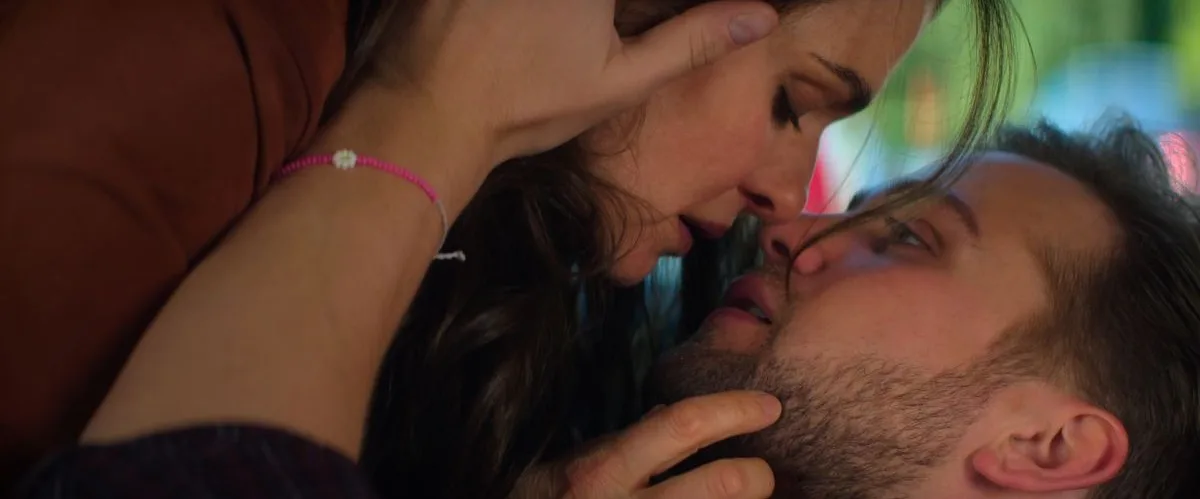
The fantasies arrive unannounced quick, charged flashes of imagined encounters in offices and hallways and other places where nothing like that should happen. Yet the scenes don’t feel seductive so much as awkwardly revealing. They expose a hunger that’s almost painful to watch. Instead of romance, the mood tilts toward embarrassment. You feel the way someone might feel overhearing a confession they weren’t meant to hear.
And that discomfort is where the show does its most interesting work.
Nearly everyone in Vladimir behaves badly in one way or another. The trick is that the story refuses to offer a stable perch from which to judge them. You’re not exactly rooting for anyone. At times you’re simply watching the moral fog thicken and wondering who will wander out of it first.
Beneath all the gossip and faculty politics, the series keeps circling a thorny distinction: the difference between what’s illegal, what’s unethical, and what’s merely ugly. On this campus those categories blur together constantly. Characters argue as if they’re interchangeable, then react with surprise when they’re treated differently.
Recommended: Young Sherlock (2026) Parents Guide
Students complicate things further. Their expectations around power, consent, and responsibility don’t line up neatly with the habits of the tenured faculty who trained in another era. Sometimes the generations talk past each other. Sometimes they collide head-on. The show observes those clashes with a dry kind of amusement, as if it has spent a long time watching these debates repeat themselves.
Through it all, the protagonist keeps narrating, rationalizing, drifting deeper into the story she tells about herself.
For seven episodes the whole thing threatens to spiral apart completely. Affairs, accusations, wounded pride—it starts to feel like a farce staged in an English department.
Then the final episode arrives and quietly reshapes what we’ve been watching.
I won’t spoil it, except to say the ending carries a sly smile. The chaos doesn’t disappear, but it suddenly makes a strange emotional sense. Something about the protagonist’s long search for control twists into a realization that feels both liberating and a little unsettling.
You finish the series with the faint suspicion that the story wasn’t really about Vladimir, or even the scandal at the college.
It was about a woman discovering what remains of her identity after the room stops revolving around her and deciding, with a raised eyebrow, what to do next.
Vladimir Parents Guide
Vladimir carries a TV-MA rating, and that feels about right. The show spends its time inside adult anxieties aging, attraction, professional scandal, and the awkward power games that happen when intelligent people behave like teenagers with tenure. Nothing here aims to shock for the sake of it, but the themes, conversations, and situations clearly belong to grown-ups.
Violence & Intensity: There’s very little physical danger on screen. No fights, no blood, no moments built around shock. The tension is social and psychological instead. Characters argue in offices and faculty meetings, accusations hover over disciplinary hearings, and several scenes revolve around the dread of reputations collapsing in public. When the show gets intense, it’s because someone says the wrong thing in the wrong room and the silence afterward tells you the damage is already done.
Language: The dialogue sounds like adults who’ve stopped worrying about being polite. Profanity pops up regularly in conversations usually in sarcastic remarks, irritated exchanges, or moments where someone finally loses patience. It never becomes a constant barrage, but you’ll hear strong language often enough that younger viewers will notice. The sharper moments come less from the words themselves and more from how casually cruel some of the remarks can be.
Sexual Content / Nudity
Sexual tension sits right in the middle of the story. The plot revolves around inappropriate relationships on campus, blurred professional boundaries, and the protagonist’s increasingly vivid fantasies about a younger colleague. Some scenes involve implied intimacy, while others play out entirely in her imagination often in places where that kind of encounter would obviously be disastrous. Nudity is limited, but the subject matter is unmistakably adult and occasionally uncomfortable in a deliberate way.
Drugs, Alcohol & Smoking: Alcohol shows up fairly often, mostly in the background of dinners, faculty gatherings, and those late-night conversations where people start telling the truth they avoided earlier. Wine and cocktails appear more as social habits than reckless indulgence. Drug use barely factors into the story, and smoking is rare enough that it’s easy to forget about.
Age Recommendations: This series works best for adults and older teens, roughly 16 or 17 and up. Younger viewers probably won’t connect with it anyway. The drama comes from middle-aged insecurity, academic politics, and complicated relationships topics that don’t mean much until you’ve spent a little time around them.
Recommended: The Gray House 2026 Parents Guide
