Last Updated on February 27, 2026 by Monica Castillo
By the fourth episode of DTF St. Louis, I stopped trying to solve the murder. Not because the clues weren’t there, but because the show had already tipped its hand about what it cared about more. This wasn’t a puzzle box begging to be cracked. It was a confession booth with unreliable lighting, where everyone speaks plainly until they don’t, and every detail feels true right up to the moment it doesn’t.
The series arrives wearing the outline of a noir two narrators, two cops, one dead man—but it refuses to sit still inside that shape. Each episode rearranges what we think we know, not with flashy reversals, but with small recalibrations that feel like memory adjusting itself in real time. Was that how it happened, or just how it’s easier to remember? The question hangs over every scene, unanswered and quietly accusatory.
What surprised me most was how funny the show is without ever winking at the audience. The humor isn’t there to relieve tension. It deepens it. Writer-director Steven Conrad, best known for gentler, more aspirational films, reveals a gleefully dirty imagination here. He lets characters talk too much, say the wrong thing, overshare in ways that feel both mortifying and intimate. The show’s willingness to talk frankly about sex desire, shame, boredom, curiosity feels less like provocation than curiosity. No one gets scolded for wanting what they want. The judgment only creeps in when those wants begin to tilt toward harm.
Highly Recommended: The Gray House 2026 Parents Guide
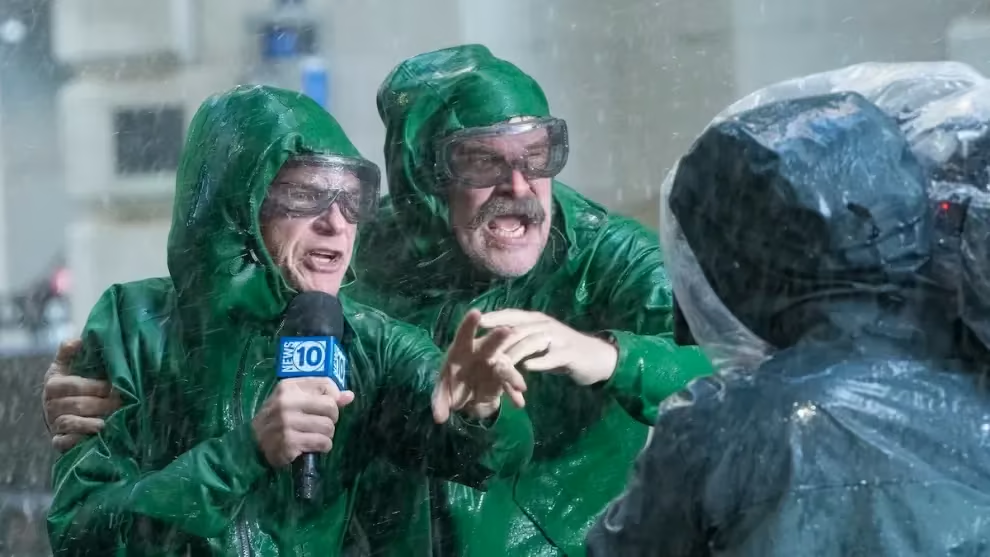
Jason Bateman’s Clark Forrest embodies that slipperiness beautifully. A local weather forecaster with a pleasant voice and a face trained to reassure, Clark presents himself as mild, even submissive. He chatters. He explains. He frames every decision as reasonable. Bateman understands how dangerous that can be. His Clark doesn’t raise his voice or twirl a mustache. He persuades. He nudges. He lets other people think they’re steering.
David Harbour plays Floyd, Clark’s on-air sign language interpreter and supposed friend, as a man perpetually braced for embarrassment. Harbour strips away vanity completely. Floyd is awkward, broke, emotionally exposed, and deeply kind in ways that don’t always help him. In flashbacks and retellings, Harbour keeps finding new shadings, reminding us that the saddest person in the room is often the one everyone thinks they’ve already figured out. The performance sneaks up on you. By the time you realize how much you care, it’s too late.
Linda Cardellini’s Carol sits at the center of the storm, and the show wisely refuses to label her too quickly. She’s funny, guarded, capable of affection and calculation in the same breath. Cardellini plays her with a straight-faced calm that makes every line reading feel like a test. Is she flirting? Warning? Laying groundwork? The answer changes depending on who’s telling the story, and Cardellini adjusts just enough to make each version plausible.
The framing device two detectives listening, nodding, missing things could’ve been a crutch. Instead, it sharpens the show’s perspective. Richard Jenkins brings a weary bemusement to the older cop, whose confidence keeps colliding with a world that’s moved past his assumptions. Joy Sunday’s younger investigator watches, listens, and quietly recalibrates the room. Neither is incompetent. Neither is particularly brilliant. That balance makes the humor land and the mystery feel appropriately unstable.
Conrad’s visual instincts deserve their own praise. He favors off-kilter angles and odd physical arrangements, encouraging bodies to slouch, lean, or freeze in poses that feel slightly wrong. The sheriff’s station looks like a concrete afterthought from a dystopian municipal dream, all harsh lines and sickly colors. It’s a place designed not for clarity, but endurance. The camera never rushes to make it pretty.
What the show keeps returning to, gently and then insistently, is affection. For all the lying, maneuvering, and betrayal, the characters keep circling back to one claim: that they loved Floyd. Maybe more than they loved anyone else. Maybe in the only way they knew how. Bateman and Cardellini sell those declarations whether they’re sincere or strategic, and Harbour’s growing presence makes the claim harder to dismiss outright.
After more than half the season, certainty feels beside the point. The show isn’t racing toward revelation. It’s watching how people talk when they need to justify themselves, how memory bends under pressure, how desire complicates morality without asking permission. In a crowded field of domestic crime stories desperate to outsmart the audience, DTF St. Louis chooses a stranger tactic. It disarms you. Then it waits.
There’s still a chance the ending could fumble all of this. That risk feels baked in. For now, though, the series does something rarer. It messes with your head while quietly appealing to your capacity for empathy. You don’t finish an episode feeling clever. You finish it feeling implicated.
DTF St. Louis isn’t violent in a loud or graphic way, but its intensity lingers. The story circles a death and keeps returning to it from different angles, letting emotional cruelty, manipulation, and moral pressure do most of the damage. When violence enters the frame, it’s subdued and sobering, more upsetting for its implications than for what’s shown. The unease comes from listening to people calmly describe behavior they’re still trying to justify.
DTF St. Louis Parents Guide
The language is adult and frequent. Characters swear casually and often, using strong profanity as part of everyday speech rather than for emphasis. Conversations are blunt, sometimes abrasive, especially when they veer into sex or resentment. There are no slurs meant to demean groups, but the tone is sharp and unfiltered, the kind of dialogue that assumes no children are listening.
Sexual content is central to the series and impossible to sidestep. The plot revolves around infidelity, fetishes, and emotional needs that don’t fit neatly into polite categories. While nudity is limited and scenes avoid explicit visuals, the dialogue goes into clear, sometimes graphic detail about sexual acts and desires. The show talks about sex far more than it shows it, but it does so with a level of specificity that leaves little to the imagination.
Alcohol is woven into the fabric of the characters’ lives. People drink while socializing, while venting, while avoiding conversations they don’t want to have. It’s rarely framed as reckless, but it often sits alongside bad decisions and emotional avoidance. Drug use and smoking barely register, but alcohol functions as a quiet enabler loosening tongues, blurring judgment, and greasing the wheels of choices that later curdle into regret.
In terms of age suitability, this is firmly for adults. Not because of shock value, but because of how openly it handles sex, marriage, betrayal, and self-deception. Older teens might grasp the plot, but the emotional terrain is written for viewers with lived experience and tolerance for moral gray areas.
Highly Recommended: The Fall and Rise of Reggie Dinkins Parents Guide
